
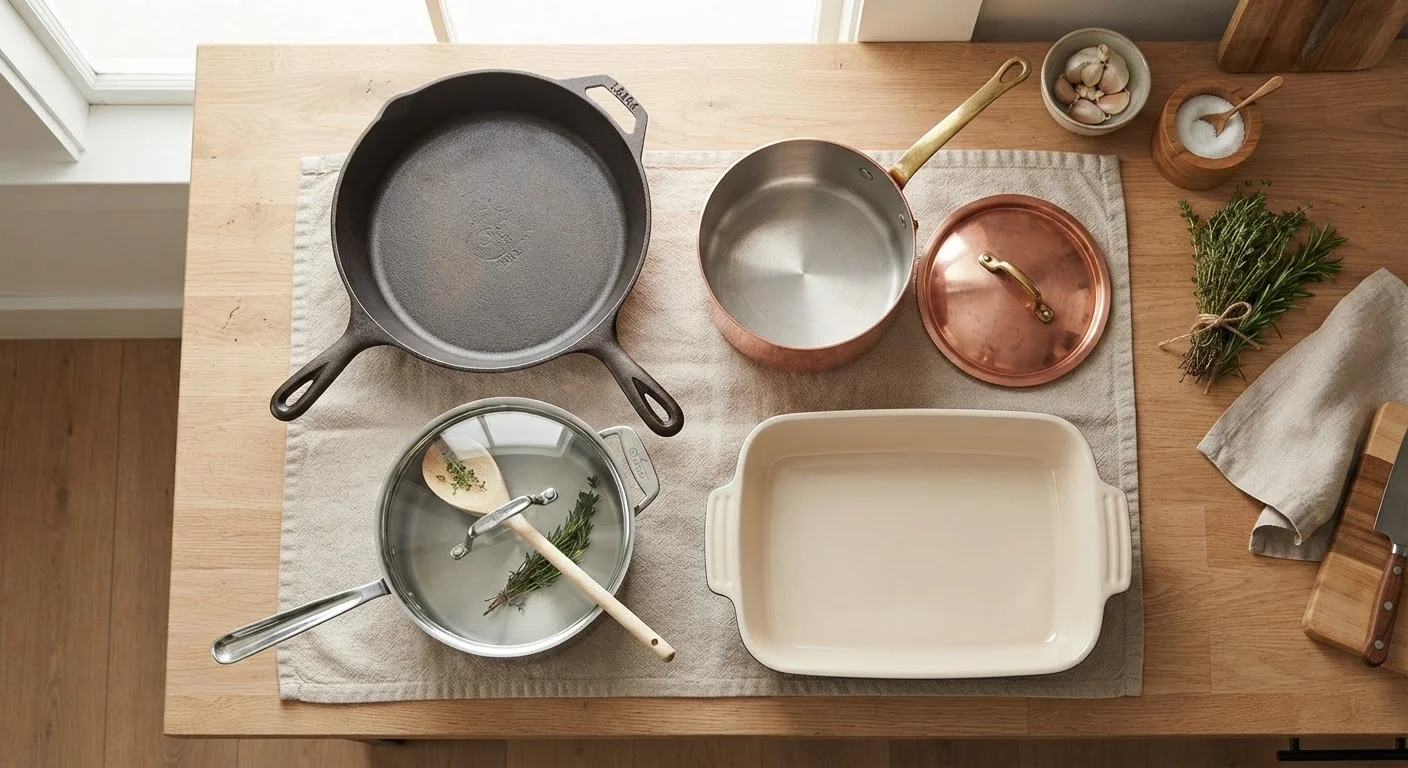
Why Cookware Material Actually Matters
Walk into any kitchen store and the sheer variety of pots and pans can feel paralyzing. But most of the decisions come down to a single practical question: how does the material behave under heat? Different metals and coatings conduct, hold, and distribute heat in distinct ways — and those differences affect how your food cooks, how much effort you put in, and how long the cookware lasts.
This guide breaks down the most common cookware materials so you can match what you buy to how you actually cook. If you're setting up a kitchen from scratch, see our guide to essential kitchen equipment for a broader starting point.
| Best for heat retention | Cast iron |
| Best for heat responsiveness | Copper |
| Most induction-compatible | Cast iron, carbon steel, magnetic stainless |
| Lowest maintenance | Stainless steel (clad) |
| Nonstick coating lifespan | Typically 3–5 years with proper care (General industry guidance; varies by brand and use) |
| Handles acidic foods well | Stainless steel, enameled cast iron |
Material by Material: What You Need to Know
Each material has a genuine niche. Here's a plain-language breakdown:
Heat Retention
A material's ability to hold and maintain heat after the burner is adjusted or turned off. Cast iron has high retention; copper has low retention and cools quickly.
Heat Conductivity
How efficiently a material transfers heat from the source to the food. Copper and aluminum conduct heat rapidly; stainless steel alone does not.
Seasoning
A layer of polymerized oil baked onto cast iron or carbon steel surfaces. It creates a naturally nonstick, protective finish that builds up with use and proper care.
Clad Construction
A manufacturing method that bonds multiple layers of metal — typically stainless steel on the outside and aluminum in the core — to combine durability with better heat distribution.
Reactive vs. Non-Reactive
Reactive materials (cast iron, copper, aluminum) can interact with acidic foods, causing metallic flavors or discoloration. Non-reactive materials like stainless steel and enameled surfaces do not.
PTFE
Polytetrafluoroethylene — a synthetic polymer used as a nonstick coating in many pans. It is stable under normal cooking temperatures but degrades at very high heat.
Cast Iron
Cast iron excels at heat retention and is nearly indestructible with basic care. It heats slowly and unevenly at first but holds temperature steadily once hot — ideal for searing, frying, and baking. It reacts with acidic foods (tomatoes, citrus) if not well-seasoned, and requires hand washing plus occasional re-seasoning with oil. Enameled cast iron adds a protective coating that eliminates seasoning needs but reduces the nonstick qualities over time.
Stainless Steel
Stainless steel is durable, non-reactive, and dishwasher-safe — a workhorse for most savory cooking. On its own, it's a poor heat conductor, so quality pieces bond stainless with an aluminum or copper core (called "clad" construction) to improve evenness. It can stick without adequate fat and preheating, but it develops fond (those browned bits that make great sauces) in a way coated pans cannot.
Nonstick (PTFE/Ceramic-Coated)
Nonstick coatings reduce sticking and make cleanup fast. Traditional coatings use PTFE (commonly known by brand names), while newer pans often use ceramic-based coatings marketed as free of PTFE and PFOA. Both have life spans: coatings degrade with high heat, metal utensils, and abrasive cleaning. They are generally not suited for high-heat searing. For a deeper look at safety questions around nonstick surfaces, see our article on nonstick cookware safety myths.
Copper
Copper offers the fastest, most responsive heat control of any common cookware material — it heats and cools almost immediately when you adjust the burner. That precision makes it popular for delicate sauces. It is reactive with acidic foods, so most copper cookware is lined with stainless steel or tin. It requires polishing to prevent tarnish and is among the heavier investments in this category.
Carbon Steel
Often overlooked, carbon steel sits between cast iron and stainless in terms of weight and performance. It heats faster than cast iron and develops a seasoned surface over time, making it a practical choice for high-heat cooking like stir-frying or crepes. Like cast iron, it requires seasoning and doesn't like prolonged contact with acidic ingredients.
Choosing for Your Cooking Habits
3–5 years
Typical nonstick coating lifespan
General industry guidance; actual lifespan depends heavily on heat exposure, cleaning habits, and utensil use.
~10%
Heat conductivity of stainless vs. copper
Copper conducts heat roughly 10 times more efficiently than stainless steel, which is why clad construction adds an aluminum or copper core.
The right material depends less on what's technically superior and more on how you cook day to day. A few questions worth asking:
- Do you cook acidic dishes often? If so, avoid uncoated cast iron and unlined copper for those recipes; stainless or enameled options handle acids without issue.
- How much maintenance are you willing to do? Cast iron and carbon steel reward care but punish neglect. Stainless and ceramic-coated pans are more forgiving.
- What heat sources do you have? Not all materials are induction-compatible. Cast iron, carbon steel, and magnetic stainless work on induction; most aluminum and copper do not unless they have a magnetic base.
- What are you cooking most? Eggs and fish benefit from nonstick surfaces. Steaks and roasts do better in cast iron or stainless. Sauces needing precision control suit copper or clad stainless.
If you're rethinking your diet alongside your kitchen setup — perhaps shifting toward more vegetables and whole foods — our overview of plant-based eating for beginners covers how cooking methods fit into that transition.
No single material does everything equally well. Most practical home kitchens end up with two or three pans in different materials rather than a matched set in one.