
Start With a Spending Reality Check
Before you can stretch a tight budget, you need an honest picture of where the money is actually going. Most people underestimate their discretionary spending by a meaningful margin — not because they're careless, but because small purchases don't feel significant in the moment.
Start by reviewing the last four weeks of bank or card statements and categorizing every transaction: groceries, dining out, clothing, household supplies, subscriptions, and so on. This isn't about guilt — it's about data. Once you can see your actual spending patterns, you can make intentional choices rather than reactive ones.
The Budgeting Basics hub offers practical frameworks for tracking spending and setting realistic category limits if you're starting from scratch.
~$3,000
Average annual U.S. household food-at-home spending
According to the U.S. Bureau of Labor Statistics Consumer Expenditure Survey, grocery spending is one of the largest flexible household cost categories.
30%+
Food wasted in the average U.S. household
The USDA estimates that American households waste roughly 30–40% of the food supply, much of which represents money already spent at the grocery store.
Groceries: Where Most Budgets Leak
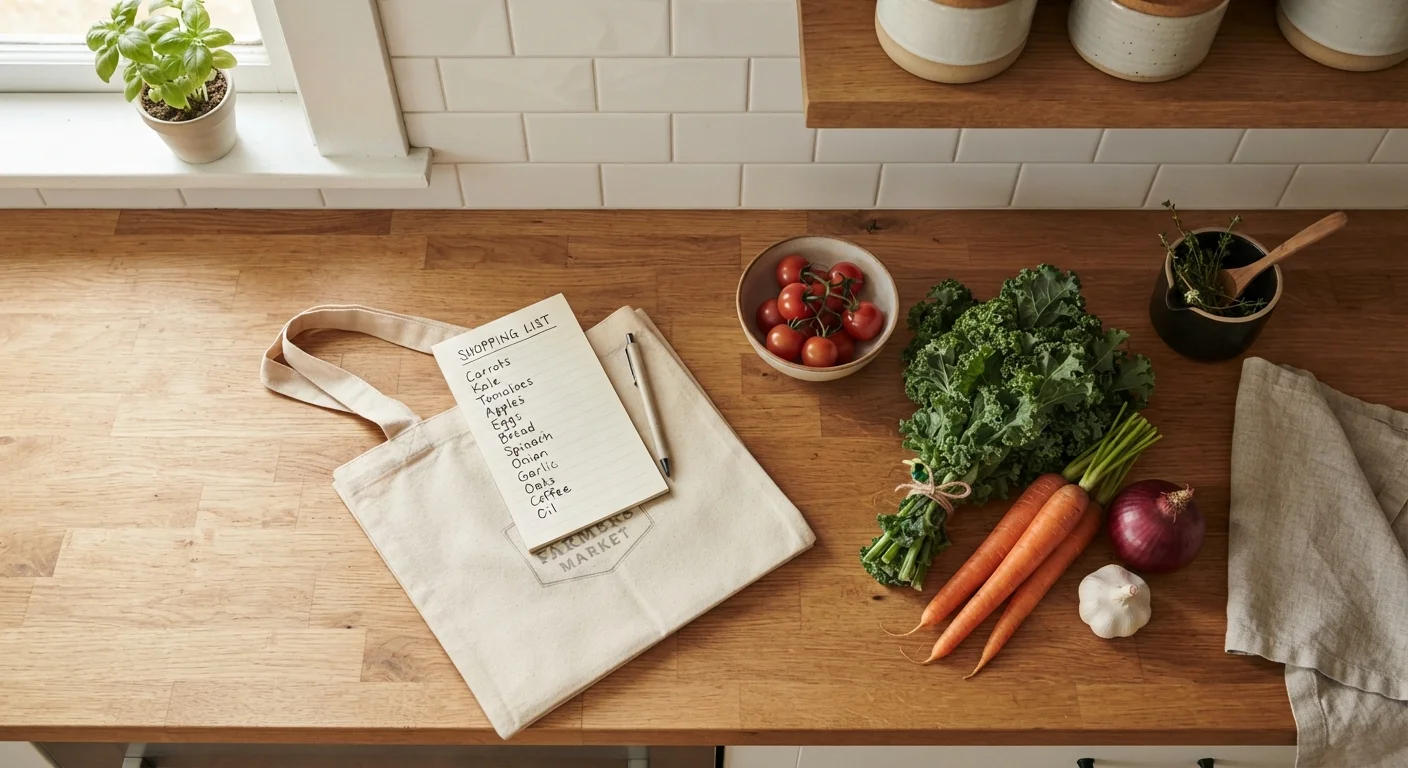
Food is often the largest flexible expense in a household budget — which means it's also where deliberate changes have the most impact. The single most effective habit is shopping with a plan. Unplanned grocery trips consistently lead to overspending — impulse additions accumulate fast when there's no list anchoring the trip.
A few practices worth adopting:
- Check what you have first. Buying duplicates of pantry items you already own is a quiet budget drain.
- Use unit prices, not sticker prices. The shelf tag's unit price (cost per ounce, per count, etc.) is the only fair comparison between sizes and brands. Our guide on unit price math explains how to read these accurately.
- Plan meals around what's on sale, not the reverse. Build your week's meals after scanning weekly store circulars, not before.
Nutrition doesn't have to suffer when the budget tightens. The weekly grocery list audit is a useful tool for making sure cost-cutting doesn't quietly eliminate important food groups.
Write your grocery list in store-aisle order. It sounds minor, but moving through the store efficiently reduces browsing time — and browsing time is when unplanned items land in the cart.
Retail research consistently shows that time spent in-store correlates with unplanned purchase rates; a structured path shortens exposure to impulse triggers.
Keep a 'waiting list' for non-essential wants instead of buying immediately. Review the list weekly — you'll often find the urge has passed for half the items.
Introducing a delay between desire and purchase is one of the most reliable behavioral strategies for reducing discretionary overspending.
Clothing and Household Goods on a Tight Budget
Clothing and household purchases feel less frequent than groceries, but they can erode a budget just as steadily — especially when bought reactively rather than deliberately.
For clothing: Off-season shopping, when retailers clear inventory, often yields the steepest discounts on items you'll actually use. Thrift stores and resale platforms have expanded significantly and now carry a wide range of quality and styles. The key is resisting the urge to buy something just because it's inexpensive — a cheap item you don't need is still money spent.
For household goods: Prioritize durability over upfront cost for items used daily. A lower-priced product that needs replacing in six months often costs more over time than a mid-range item that lasts years. For larger purchases — mattresses, furniture, appliances — take time to read return policies carefully. Our piece on what no one tells you about buying a mattress illustrates how fine print can catch shoppers off guard.
Try the Cost-Per-Use Test
Before any clothing or household purchase, estimate how many times you'll realistically use it in the next year, then divide the price by that number. A $60 item used 60 times costs $1 per use; a $15 item used twice costs $7.50 per use. This reframe helps distinguish genuine value from apparent bargains.
Resisting Retail Pressure
Retail environments — both physical and online — are engineered to encourage spending beyond what you planned. Countdown timers, low-stock warnings, and price anchoring (showing a high "original" price next to a sale price) are all deliberate design choices, not neutral information. Understanding them is the first step to not being moved by them.
Sales tactics are designed to rush decisions — and rushed decisions are rarely the most budget-conscious ones. A simple personal rule: for any non-essential item above a threshold you set yourself (many people use $30–$50), wait 24–48 hours before completing the purchase.
Before any non-essential buy, running through a brief checklist can prevent regret. The pre-purchase checklist gives you a practical set of questions to ask before adding something to your cart.
A Sale Price Is Only a Saving If You Needed the Item
Retailers frame discounts as savings, but spending money you hadn't planned to spend — regardless of the discount — is still an expense. Before acting on any promotion, ask whether you would have sought out this item at full price. If the answer is no, the 'saving' is actually a cost.
Building Habits That Stick
Budget discipline isn't primarily about willpower — it's about systems. The shoppers who consistently stay within their means tend to have routines that reduce the number of in-the-moment decisions they need to make.
Some approaches worth considering:
- Set a weekly review time. Ten minutes each week to compare planned vs. actual spending keeps small overruns from becoming entrenched patterns.
- Shop with a list and a rough total in mind. Knowing you're aiming to spend around a certain amount before you walk in creates a natural check on impulse additions.
- Separate channels intentionally. Some categories are genuinely better suited to online shopping; others reward in-store comparison. Our comparison of online vs. in-store shopping breaks down where each format actually delivers an advantage.
It's also worth examining the subtler patterns in your routine. Small, repeated behaviors — not big splurges — are often what erode a budget. Once you can see those patterns clearly, adjusting them becomes straightforward.
“A budget is telling your money where to go instead of wondering where it went.”
— Dave Ramsey, Personal finance author and radio host