
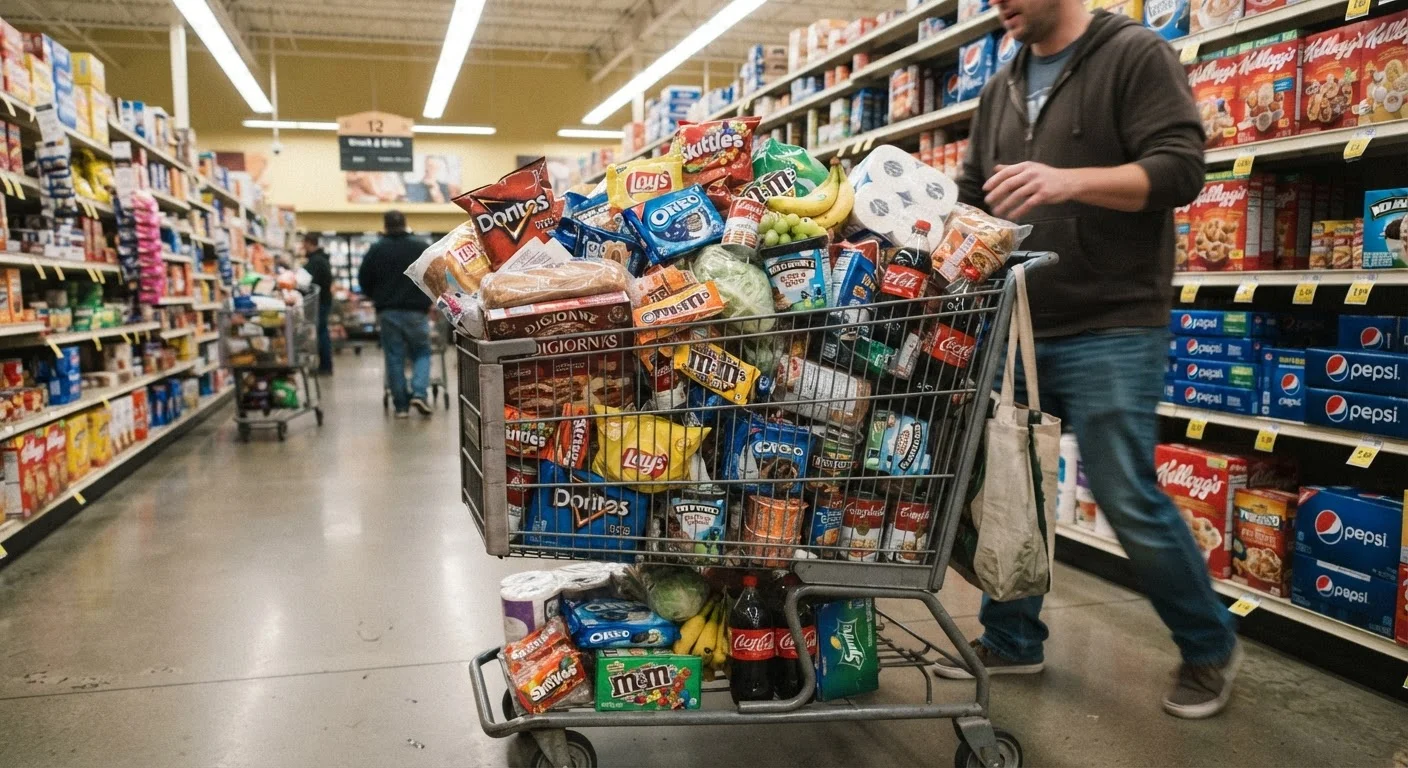
Why No Plan Almost Always Means More Money Spent
Grocery stores are deliberately designed to encourage browsing. End-cap displays, strategic product placement, and in-store promotions are built to capture attention — and dollars — from shoppers who don't have a clear agenda. Without a plan, you're navigating that environment with no anchor, which makes it significantly easier to spend beyond what you intended.
Research on consumer behavior consistently shows that unplanned purchases account for a substantial portion of grocery spending. When shoppers enter without a list, they tend to make decisions based on what looks appealing in the moment rather than what fits their actual needs or budget. The result is a cart full of items that seemed reasonable individually but add up to a bill that's hard to account for later.
This isn't purely a willpower issue. It's a systems problem — and systems problems respond well to simple, repeatable solutions. Understanding where the specific mistakes happen is the first step toward fixing them. For a broader look at spending patterns that quietly drain budgets, see habits that quietly undermine even careful shoppers.
The Most Common Grocery Planning Mistakes
These are the errors that appear most frequently — and most expensively — for shoppers who skip the planning step.
Shopping without a written list.
Why it happens: Most people believe they know what they need from memory, or plan to "just grab a few things" — which rarely stays that way once inside the store.
Not checking what's already at home before shopping.
Why it happens: It takes an extra few minutes to look through the pantry, fridge, and freezer — minutes that feel easy to skip when you're busy.
Shopping without a meal plan, even a rough one.
Why it happens: Meal planning feels like a big commitment, so many shoppers buy ingredients loosely and hope meals will come together during the week.
Shopping while hungry.
Why it happens: It's inconvenient to time grocery trips around meals, so shoppers often go when it's convenient rather than when they're in the best state to make clear-headed decisions.
Treating in-store promotions as reasons to buy.
Why it happens: A sale feels like an opportunity, and it's easy to rationalize buying something you didn't plan for because the price seems good in the moment.
If you want to go further than avoiding these mistakes, the pre-purchase checklist for smarter spending offers a practical framework for evaluating any item before it goes in the cart.
Small Habits That Make a Measurable Difference
~$1,500
Estimated annual cost of grocery waste per household
The USDA estimates that American households throw away a significant portion of the food they purchase, with some analyses placing the annual household cost of food waste in this range.
60%+
Grocery purchases that are unplanned
Studies on in-store consumer behavior have consistently found that a majority of grocery purchase decisions are made inside the store rather than before entering it.
The most effective grocery planning habits are low-effort and repeatable. Spending 10–15 minutes before each shopping trip to review what you already have, map out a few meals for the week, and write a list organized by store section can prevent most of the mistakes above.
Checking unit prices — not just package prices — is another habit worth building. A larger package is not always the better value, and a store brand is not always cheaper per ounce than a name brand on sale. Our guide to unit price math explains how to read shelf tags accurately. Similarly, buying in bulk only saves money when you'll realistically use what you buy before it expires or goes stale.
For shoppers working with a tighter budget, making the most of a tight shopping budget covers deliberate strategies across groceries and household goods. And if you want to make sure your planned meals are nutritionally sound, the weekly grocery list audit is a useful companion tool.
Warehouse Clubs Require Extra Caution
Bulk stores can feel like the natural solution to planning ahead, but they carry their own risks for unplanned spending. Large quantities of perishables can go to waste, and the membership cost needs to factor into any savings calculation. Read more in our guide to when warehouse clubs actually make sense before assuming bigger always means better value.
Planning your grocery shop is one piece of a larger budgeting puzzle. For foundational strategies on tracking spending across all categories, the Budgeting Basics hub is a practical starting point.