
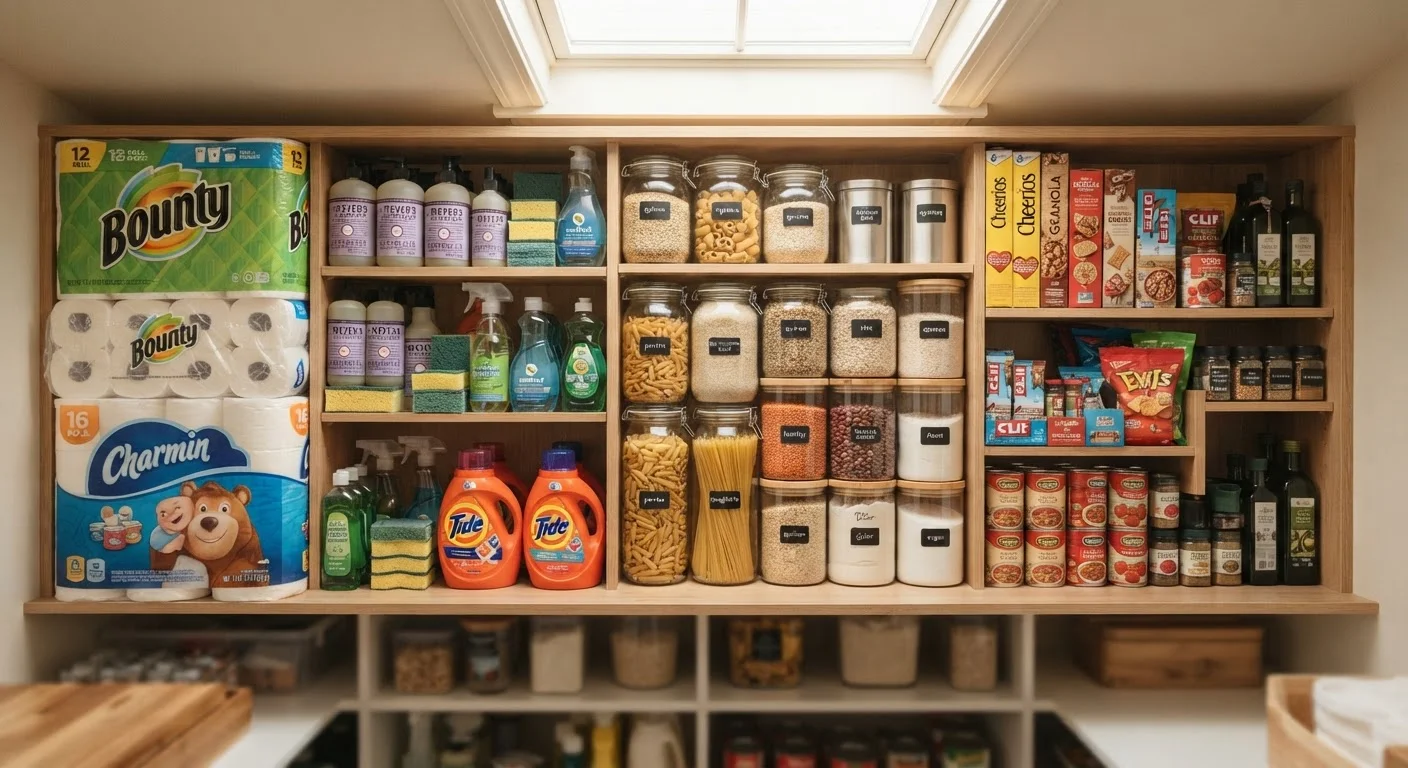
The Core Logic Behind Bulk Buying
The appeal is straightforward: buying more units at once typically lowers the cost per unit. Retailers can afford to offer that discount because a larger transaction reduces their handling overhead, and you're committing to a product you might otherwise comparison-shop. For household goods you use consistently, that arithmetic can genuinely add up over a year.
But cost-per-unit is only part of the equation. The real savings calculation has to account for storage costs, spoilage or expiration, the opportunity cost of cash tied up in inventory, and — less often discussed — the behavioral tendency to use products faster when there's a large supply on hand. Understanding all of these factors is what separates a genuine deal from the feeling of one. The unit price detail on shelf tags is the most reliable starting point for any bulk comparison.
Where Bulk Buying Delivers Real Value
Certain product categories are well-suited to bulk purchasing. The common thread: they're non-perishable, used at a steady rate, and don't require a trial period.
Lower cost per unit on staple products
Buying larger quantities typically reduces what you pay per ounce, sheet, or dose. Over months of regular use, this can produce meaningful savings on items like laundry detergent, trash bags, and paper towels.
Fewer shopping trips for household essentials
A well-stocked supply of non-perishables reduces the frequency of restocking runs, which can limit impulse purchases and save time — both of which have real dollar value.
Buffer against short-term price increases
Stocking up when prices are stable provides a partial hedge if costs rise later, particularly for commodity goods like cleaning products or canned goods.
Reduces packaging waste over time
Larger containers often use less packaging per unit of product than multiple smaller versions, which can be a meaningful consideration for environmentally conscious households.
Cleaning supplies, paper products, and personal care staples like bar soap or shampoo typically fit this profile. So do dry pantry goods — rice, pasta, canned goods — for households that cook regularly. The discipline of deliberate shopping is especially valuable here: buying a known product in a larger size when you're not under time pressure is almost always cheaper than buying it in smaller sizes during a busy week.
When Bulk Buying Costs More Than It Saves
The disadvantages of bulk buying tend to be less visible at the point of purchase, which is precisely why they're worth spelling out.
High upfront cost strains cash flow
Buying in bulk requires spending more money at once, even if the per-unit cost is lower. For households on tight budgets, that cash outlay can create short-term pressure that offsets the long-term savings.
Storage space is a real constraint
Large quantities of paper goods, cleaning supplies, or canned goods require adequate, dry, accessible storage. Many households — particularly in apartments — simply don't have the square footage to benefit from bulk quantities.
Perishables and variable-use items risk waste
Food items with limited shelf lives, products used at irregular rates, or goods whose formulation you might want to change (like vitamins or skincare) can expire or become obsolete before you work through a bulk supply.
Encourages overconsumption of stocked products
Research in consumer behavior suggests that larger supply quantities can increase usage rates — people tend to use more when they perceive abundance. This can erode the per-unit savings the bulk purchase was intended to generate.
Unit price isn't always actually lower
Not every bulk package represents a genuine discount. Without checking the per-unit price on the shelf tag, it's easy to assume a large package is cheaper when a smaller or store-brand option is actually the better value.
The most common trap is buying in bulk based on a price that looks appealing without verifying the per-unit math. Warehouse clubs, in particular, aren't always cheaper than standard retailers once you factor in membership fees and the actual unit price. For a closer look at that specific dynamic, see when warehouse memberships don't pencil out.
~30%
Estimated household food waste by weight
The USDA has estimated that American households waste roughly 30% of the food they purchase, a figure relevant to evaluating bulk food purchases against actual consumption habits.
1 in 3
Bulk buyers who report unused product waste
Consumer surveys have found that a significant share of bulk shoppers acknowledge regularly discarding products they bought in large quantities before finishing them.
It's also worth noting that buying unfamiliar products in bulk carries real risk. If you discover you dislike a cleaning product or a food item disagrees with someone in your household, you're stuck with a large quantity. A useful pre-purchase habit: run through a short checklist before committing to any larger-than-usual purchase.
A Practical Framework for Deciding
Before buying anything in bulk, four questions are worth answering honestly:
- Do I use this regularly? If it's not something you reach for at least monthly, bulk quantities will likely sit and potentially expire or deteriorate.
- Do I have appropriate storage? Bulk goods that end up in inconvenient locations tend to get forgotten or damaged. Crowded closets also make it harder to track what you actually have.
- Is the unit price genuinely lower? Not every large package is cheaper per unit — store brands in standard sizes sometimes undercut bulk prices from national brands.
- Can I absorb the upfront cost comfortably? Bulk buying that requires putting a purchase on credit — especially revolving credit — can eliminate savings through interest charges.
For households managing tighter budgets, shopping with a clear plan often delivers more consistent savings than bulk buying alone. The two strategies work best together, not as substitutes for each other.
Membership Fees Change the Math
If you access bulk goods through a warehouse club, factor the annual membership fee into your savings calculation. A household that only buys a handful of categories in bulk may find that the fee erodes most of the per-unit savings. It's worth totaling what you actually bought in the last year and comparing it against what you would have spent at a standard retailer before renewing.