
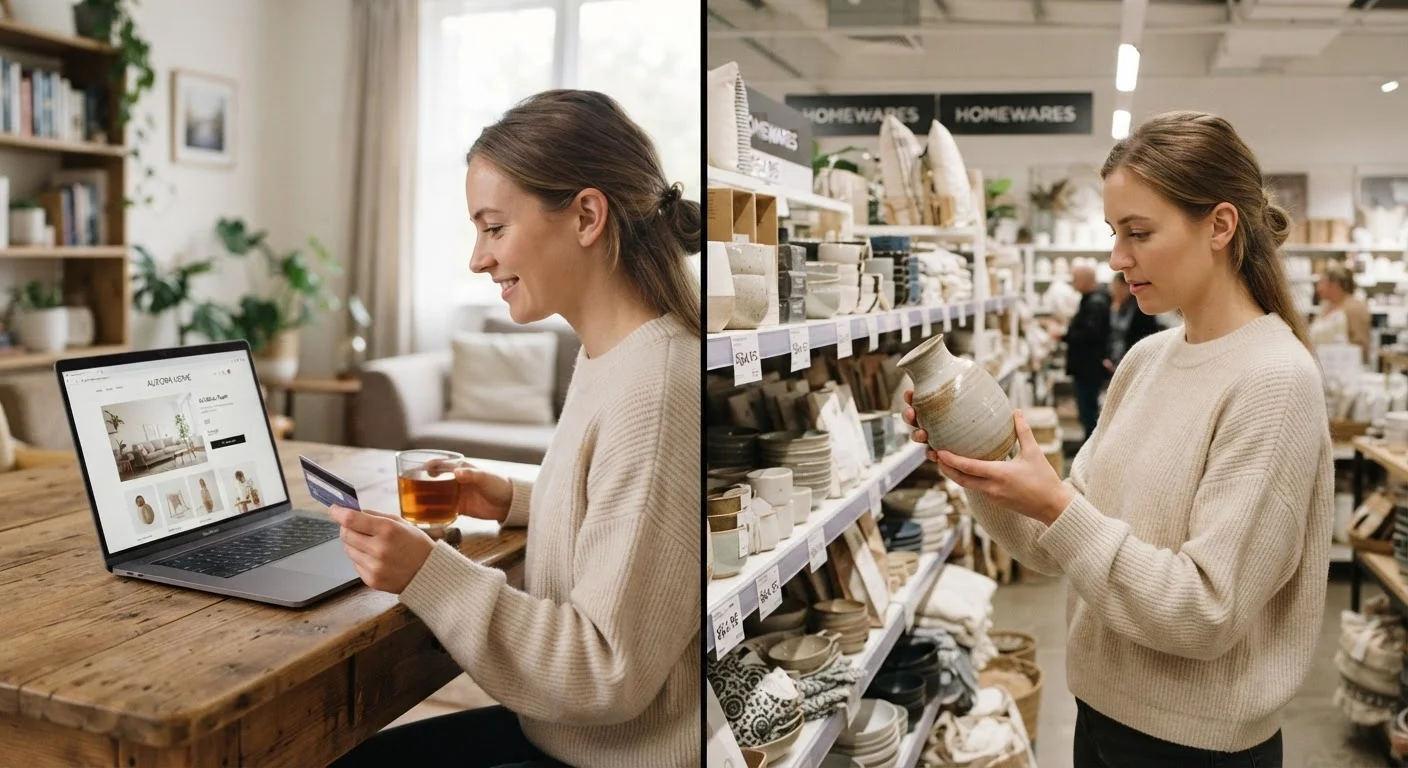
Where Online Shopping Has a Real Edge
The practical advantages of shopping online go beyond convenience. For most product categories, the ability to compare options side by side — without physically traveling between stores — is genuinely useful. Price differences on identical items can be significant across retailers, and without leaving a browser tab, a shopper can check multiple sources in minutes.
Selection is another area where online channels are structurally stronger. A physical store is constrained by shelf space and regional inventory. Online retailers aren't. That matters most when you're looking for something specific: a less common size, a particular specification, or a product that isn't stocked locally at all.
Repeat purchases benefit especially from online shopping. Once you know a product works for you — a laundry detergent, a cable, a supplement — ordering it again without a trip to the store saves real time. Subscription and auto-reorder options can remove the decision entirely for consumables.
Use Price History Tools Before Committing Online
Many online prices fluctuate regularly based on demand, promotions, and algorithmic pricing. Browser extensions and dedicated websites can show you a product's price history so you can assess whether today's listed price is genuinely favorable or just the current baseline. This is especially useful for electronics and appliances where prices shift frequently.
Price comparison is also more systematic online. Tools that track price history over time can help you evaluate whether a listed price is genuinely competitive. That kind of visibility simply doesn't exist in physical retail. If you're working with budget constraints, see our guide to shopping on a tight budget for practical strategies.
Where In-Store Shopping Holds Up Better
The clearest advantage of in-store shopping is physical evaluation. For clothing, fit is something that photos and size charts can only approximate. For furniture, the difference between how a sofa looks in a staged photo and how it feels to actually sit on it — or how the fabric reads in your lighting — is often significant. Buying unseen carries a real return risk, and returns for large or heavy items can be costly and inconvenient.
This matters especially for fashion decisions. As we explore in our look at fit versus style, how a garment actually fits your body is often the most consequential variable in whether you'll wear it and feel confident in it — something a product page can't confirm.
In-store also wins on immediacy. If you need something today — a replacement part, a kitchen item before guests arrive, a last-minute gift — a physical store is the only practical option. Same-day delivery exists but carries a premium and isn't universally available.
| Online Shopping | In-Store Shopping | |
|---|---|---|
| Price comparison | Easy — multiple tabs, price trackers | Limited to what's stocked locally |
| Product selection | Very wide; not shelf-constrained | Limited by store size and region |
| Physical evaluation | Not possible before purchase | Touch, try on, and inspect directly |
| Speed of acquisition | Delivery delay (hours to days) | Immediate — take it home today |
| Return process | Shipping required; may have fees | Drop off in person; often simpler |
| Expert assistance | Reviews and chat; asynchronous | Staff available in real time |
| Best for repeat purchases | Strong — subscription options available | Less convenient for regular restocking |
Lastly, some purchases benefit from sales staff expertise. A knowledgeable associate can answer questions in real time, compare products verbally, and help identify a fit that you might not have found browsing alone. Online reviews serve a similar function, but they're retrospective and can't respond to your specific situation.
The Categories Where the Gap Is Biggest
Not all product categories are equal. The format difference matters most in a handful of areas:
- Clothing and footwear: Size inconsistency across brands makes in-store fitting genuinely valuable. Return rates for online apparel purchases are substantially higher than for in-store purchases, reflecting this gap.
- Electronics: Online tends to offer better selection and easier price comparison, but in-store allows you to handle a device and assess build quality before committing. For big-ticket items, price matching policies can sometimes close the price gap at physical retailers.
- Groceries and household consumables: Online ordering saves time and can help with bulk buying decisions, but in-store allows you to check freshness, assess produce quality, and avoid substitution errors in fulfillment.
- Furniture and home goods: Dimensions on paper and dimensions in a room don't always translate. In-store shopping — or at minimum, requesting swatches and measuring carefully — reduces costly mistakes.
For a broader look at how shopping format intersects with store-type decisions, our analysis of warehouse club value covers how bulk-format retail compares to both conventional in-store and online channels.
How to Match the Format to the Purchase
A simple mental framework helps: ask what the main risk of getting it wrong is for this specific purchase.
If the risk is paying too much for something standardized — the same item available from many sources — online comparison shopping reduces that risk. If the risk is buying something that doesn't fit, feel, or function the way you expected, in-store evaluation reduces that risk instead.
Loyalty programs and rewards structures add another layer worth considering. Online and in-store purchases can accumulate value differently depending on the retailer. Our plain-language breakdown of cashback and rewards programs explains how these incentives actually work so you can evaluate them on their merits rather than assumptions.
~21%
Online retail return rate (apparel)
Industry estimates consistently place online apparel return rates well above in-store rates, largely due to fit and color discrepancies — a key reason in-store try-ons retain practical value.
Over 60%
Shoppers who research online before buying in-store
Multiple consumer surveys have found that a majority of in-store buyers conduct online research beforehand, suggesting most consumers already use a hybrid approach instinctively.
The most practical approach for most consumers isn't loyalty to a single format — it's treating each purchase as its own decision. Research online, evaluate in-store when physical inspection matters, and buy where the combination of price, convenience, and return terms works best for that specific item.