
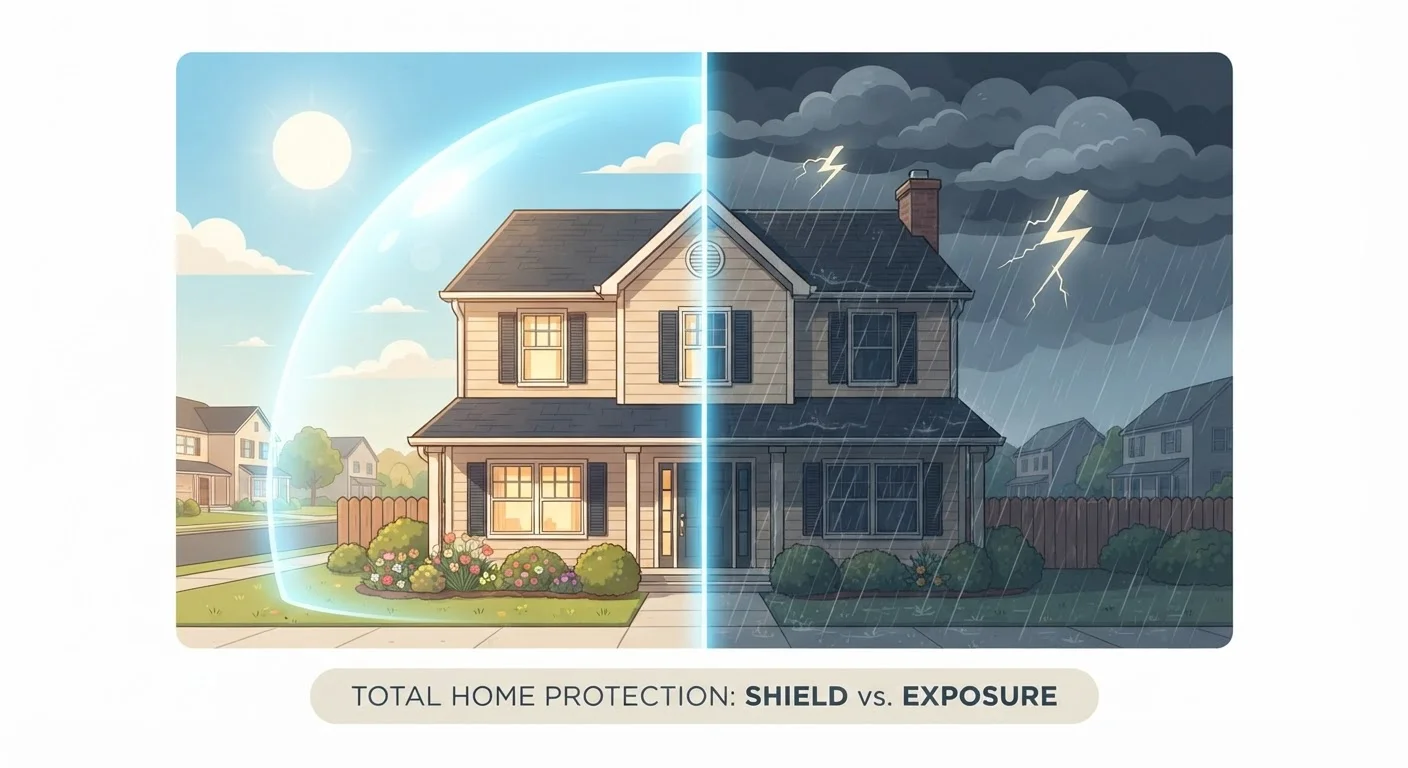
What a Standard Policy Actually Covers
A typical homeowners policy — most commonly written on what's called an HO-3 form — bundles several distinct types of protection. Understanding each one helps you know exactly what you're paying for.
- Dwelling coverage: Pays to repair or rebuild your home's structure if it's damaged by a covered event, such as fire, lightning, windstorm, or vandalism.
- Other structures: Extends to detached garages, fences, and sheds — usually at about 10% of your dwelling limit.
- Personal property: Covers belongings like furniture, appliances, and clothing if they're stolen or damaged by a covered peril, both at home and sometimes away from it.
- Liability protection: If a guest is hurt on your property or you accidentally damage a neighbor's fence, this coverage can pay for medical bills, legal fees, and settlements.
- Additional living expenses (ALE): If your home becomes uninhabitable after a covered loss, ALE covers hotel stays, meals, and similar costs while repairs are made.
The specific perils covered depend on whether your policy uses a named-perils or open-perils structure. Named-perils vs. open-perils coverage explains that distinction in plain terms and is worth understanding before you assume you're protected.
~93%
U.S. homeowners with some form of home insurance
According to the Insurance Information Institute, the vast majority of U.S. homeowners carry homeowners insurance, often because mortgage lenders require it.
1 in 50
Homeowners filing a property damage claim annually
The Insurance Information Institute estimates roughly one in fifty insured homes has a claim each year, with wind and hail damage being the most common cause.
$15,000+
Average cost of a homeowners water damage claim
Industry data from the Insurance Information Institute places average water damage and freezing claims among the most expensive non-catastrophe losses homeowners face.
What Homeowners Insurance Typically Does Not Cover
The exclusions in a homeowners policy are just as important as the coverage — and they catch many people off guard when they file a claim. Here are the most common gaps:
- Flooding: Water entering from outside — storm surge, overflowing rivers, heavy runoff — is almost universally excluded. A separate flood insurance policy is needed.
- Earthquakes: Seismic damage requires its own endorsement or standalone policy in virtually every state.
- Sewer or drain backup: Many policies exclude this unless you add a specific endorsement.
- Maintenance-related damage: Gradual deterioration, mold from long-term moisture, and pest infestations are generally the homeowner's responsibility.
- Home-based business losses: Equipment and liability tied to a business you operate from home typically fall outside standard coverage limits.
- High-value items: Standard personal property limits may not fully cover expensive jewelry, fine art, or collectibles. A scheduled rider (also called a floater) can extend coverage for specific items.
For a deeper look at how insurers define what they won't pay for, the fine print behind insurance exclusions is a useful next read. And if you want to understand the full landscape of surprises policyholders face, see our article on coverage gaps people discover only after filing a claim.
Do a Coverage Check-Up Once a Year
Set a reminder to review your homeowners policy limits each year, especially after renovations or major purchases. Construction costs rise over time, and an outdated dwelling limit could leave you underinsured if you need to rebuild. Your insurer or agent can help you recalculate replacement cost coverage.
How to Close the Gaps in Your Coverage
Once you understand where your policy stops, you can take steps to fill those holes deliberately rather than discovering them during a stressful claim.
Review your declarations page. This one-page summary lists your coverage types, limits, and deductibles. It's the fastest way to see where you stand without reading the full policy document.
Ask about endorsements. Many gaps — sewer backup, equipment breakdown, scheduled personal property — can be addressed by adding an endorsement to your existing policy rather than buying a separate one.
Consider flood and earthquake coverage separately. If you live in a flood zone or a seismically active area, these aren't optional extras — they're essential. The National Flood Insurance Program and private insurers both offer flood policies; earthquake coverage is typically available through your state or private market.
Reassess after major life changes. A home renovation, a valuable inheritance, or starting a home-based business can all shift your coverage needs significantly.
Homeowners insurance isn't one-size-fits-all, and policy terms, exclusions, and pricing vary by provider and by state. Reading your actual policy documents and speaking with a licensed insurance agent remains the most reliable way to understand what you genuinely have. For context on how auto coverage is structured differently, understanding your car insurance policy offers a useful comparison. And if you're a renter wondering how your situation differs, see renters vs. homeowners insurance for a plain-language breakdown.
This article is for general informational purposes only and does not constitute personalized insurance, legal, or financial advice. Coverage terms, exclusions, and availability vary by insurer, policy, and state. Consult a licensed insurance agent or adviser to evaluate your specific situation.