
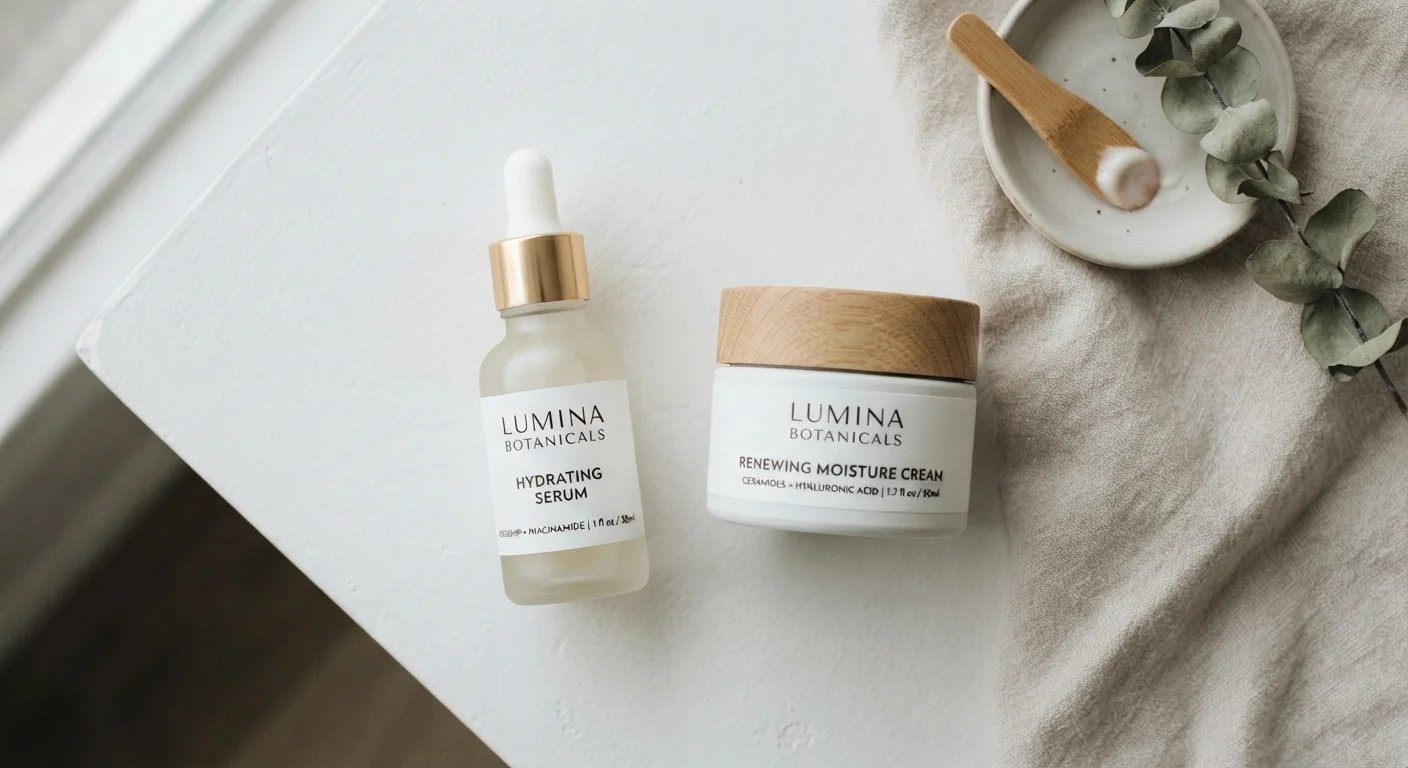
What Each Product Is Actually Designed to Do
Moisturizers and serums are both marketed around hydration, which is exactly where the confusion starts. But their formulations — and therefore their functions — are genuinely different.
A moisturizer is built to work at the skin's surface. It typically contains a blend of occlusives (ingredients that form a protective film to reduce water loss), emollients (ingredients that soften and smooth texture), and humectants (ingredients that draw water into the skin). Its primary job is to reinforce the skin barrier and lock in whatever hydration already exists, including anything you've applied underneath it.
A serum, by contrast, is formulated with smaller molecules that can penetrate more deeply into the skin's layers. Serums carry a higher concentration of active ingredients — think vitamin C for brightness, hyaluronic acid for plumping, or niacinamide for tone — and are designed to deliver those actives where a thicker moisturizer simply can't reach as effectively. Serums tend to be lightweight and water-based or oil-based depending on their purpose.
Understanding your own skin profile shapes which actives you'll want to seek out. Knowing your skin type helps you identify which concerns to target with a serum and how rich your moisturizer needs to be.
How They Compare Head to Head
Putting them side by side makes the functional differences much clearer. Neither product replaces the other — they occupy distinct roles in a routine.
| Criterion | Moisturizer | Serum |
|---|---|---|
| Primary function | Seals and protects the skin barrier | Delivers concentrated active ingredients |
| Molecular size | Larger molecules, surface-level action | Smaller molecules, deeper penetration |
| Texture | Cream, lotion, or gel | Lightweight liquid or oil |
| Application order | Applied second (last before SPF) | Applied first, on clean skin |
| Key ingredients | Occlusives, emollients, humectants | Vitamin C, hyaluronic acid, niacinamide, retinoids |
| Skin concern targeting | General hydration and protection | Specific concerns: tone, texture, wrinkles |
| Can you skip it? | Rarely — most skin types need it | Optional but highly effective |
One important note: a serum labeled "hydrating" doesn't make it a moisturizer substitute. Even the most hydrating serum leaves the skin barrier open to moisture loss without an occlusive layer on top. Similarly, a moisturizer alone won't deliver the same concentration of targeted actives as a dedicated serum.
The Right Order — and Why It Matters
Layering order isn't arbitrary. The general principle in skincare is thinnest to thickest — which means serum goes on before moisturizer, every time.
Here's the logic: serums need direct contact with skin to penetrate effectively. If you apply moisturizer first, its occlusive ingredients create a physical barrier that blocks the serum from absorbing properly. Apply serum to clean, slightly damp skin, allow it to absorb for 30–60 seconds, then follow with moisturizer to seal everything in.
A Note on Actives and Sensitivity
Some serum ingredients — particularly retinoids and exfoliating acids — can cause irritation if overused or layered incorrectly. If you're introducing a new active serum, start slowly: once or twice a week before building frequency. Applying moisturizer shortly after a potent active can help buffer sensitivity without blocking absorption, a technique sometimes called "buffering." If you have reactive or sensitive skin, consulting a dermatologist before adding high-concentration actives is a sensible step.
If you use multiple serums, layer them from thinnest to thickest consistency as well. Water-based serums before oil-based ones is a reliable rule. Your moisturizer always comes last in this phase, before SPF in a morning routine.
For a full picture of how these steps fit together, building a morning skincare routine from scratch walks through every step in sequence. And if you're curious about how nighttime routines leverage these products differently, what a nighttime routine actually does for your skin explains how skin repairs itself overnight.
Do You Need Both, or Can You Skip One?
Most skin types genuinely benefit from using both — but context matters. If you have very oily skin and live in a humid climate, a hydrating serum paired with a minimal gel moisturizer may be all you need. If you have dry or mature skin, a rich moisturizer is non-negotiable, and a serum targeting your specific concerns adds a meaningful layer of support.
Where people most often go wrong is treating serums as optional upgrades and moisturizers as the real product. In reality, the serum is doing much of the targeted work; the moisturizer is protecting and completing it.
64%
Of adults report using a facial moisturizer regularly
According to consumer survey data compiled by Statista on U.S. skincare habits, moisturizer remains the most consistently used skincare product across age groups.
2–3x
Higher active concentration in serums vs. typical moisturizers
Dermatologists generally note that serums are formulated to deliver active ingredients at significantly higher concentrations than multipurpose moisturizers.
If you're addressing specific concerns — persistent dryness, acne-prone skin, or hyperpigmentation — routines built around common skin concerns can help you decide which active ingredients belong in your serum slot.