
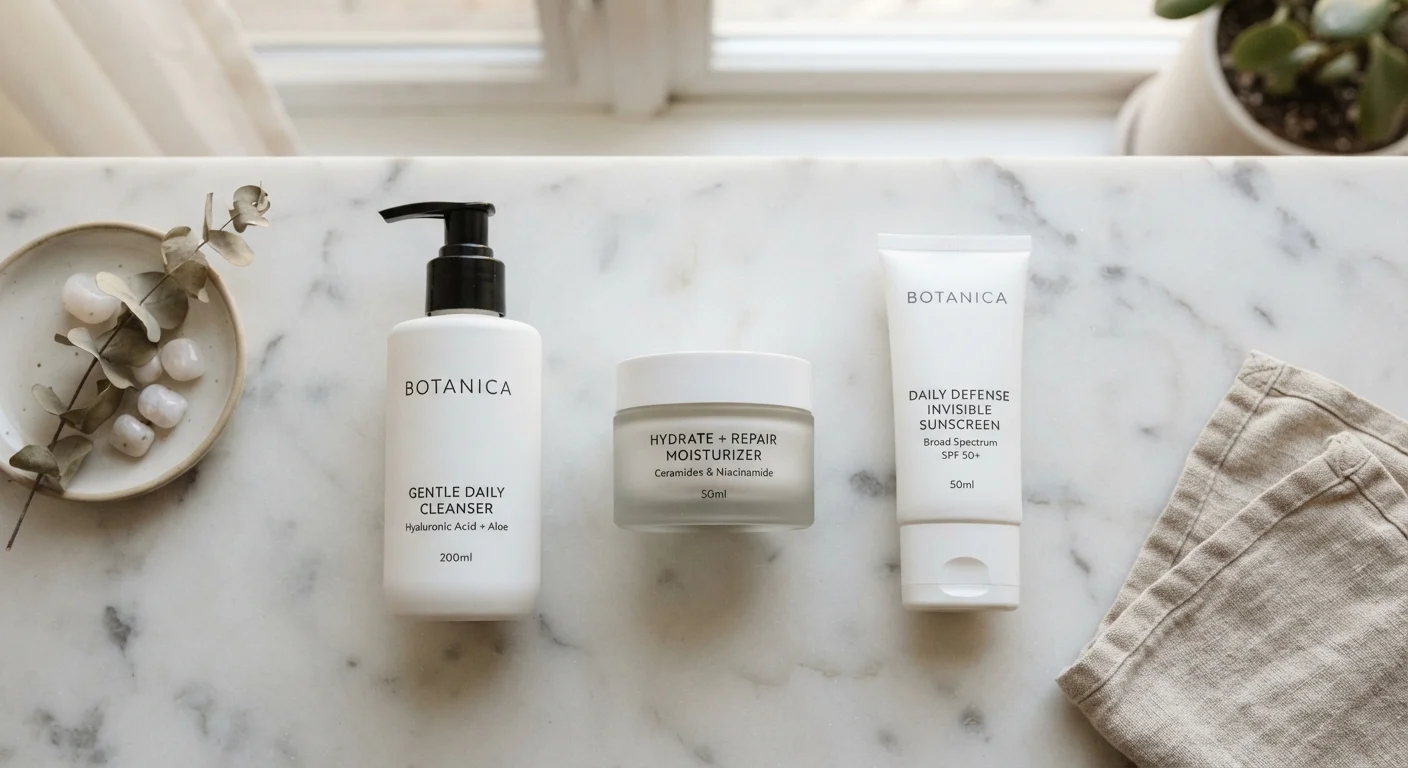
Why a Morning Routine Is Different From a Night Routine
Skincare isn't one-size-fits-all, but it is built on a consistent principle: your skin faces different challenges during the day than it does overnight. In the morning, the goal is protection and preparation — shielding skin from UV exposure, environmental pollutants, and moisture loss. At night, the skin shifts into repair mode, which calls for an entirely different set of priorities. If you want to understand that side of things, learn how a nighttime routine supports skin repair.
For mornings, simplicity is your friend. Dermatologists broadly agree that a routine doesn't need to be elaborate to be effective. The foundation is three steps — and everything else is optional. If you've ever wondered which add-ons are genuinely useful versus nice-to-have, this breakdown of what's necessary versus extra is worth a read.
What you will need
What You'll Need Before You Start
You don't need a crowded shelf to get started. Below are the tools and products that make a morning routine possible — the required items cover the essentials, while optional additions can be layered in once you're comfortable.
Gentle facial cleanser
Removes overnight oils and any residue so subsequent products absorb properly.
Moisturizer
Replenishes the skin's moisture barrier and keeps skin hydrated throughout the day.
Broad-spectrum sunscreen (SPF 30+)
Protects skin from UVA and UVB radiation, which contributes to premature aging and skin damage.
Facial toner
Can help balance skin's pH and add a layer of hydration between cleansing and moisturizing.
Vitamin C serum
An antioxidant treatment applied before moisturizer that may help brighten and protect skin tone over time.
A note on shopping: focus on your skin type when selecting products — oily, dry, combination, or sensitive — rather than chasing specific ingredients or trends. If you have a skin condition like eczema, rosacea, or persistent acne, consult a dermatologist before building a new routine.
Step-by-Step: Your Morning Skincare Routine
Follow these steps in order every morning. The sequence matters because each product prepares the skin for the next — skipping around or layering incorrectly can dilute absorption and reduce results.
Cleanse your face
Splash your face with lukewarm water and apply a small amount of cleanser — roughly a dime to quarter-size — working it gently across your skin in circular motions for about 30 to 60 seconds. Rinse thoroughly and pat (don't rub) dry with a clean towel.
Use a cleanser formulated for your skin type: foaming or gel cleansers work well for oily skin, while cream or milky formulas are gentler for dry or sensitive skin. Avoid anything that leaves your face feeling tight or stripped — that's a sign it may be too harsh.
Apply any treatment serums (optional)
If you're using a targeted treatment such as a vitamin C serum, apply it now — after cleansing and before moisturizer. Serums are formulated with smaller molecules designed to penetrate more deeply, so they always go on before heavier products.
Apply 2–4 drops to fingertips, press gently across the face and neck, and allow 30–60 seconds to absorb before moving to the next step. This step is entirely optional for beginners.
Moisturize
Apply your moisturizer to slightly damp skin — this helps seal in hydration. Use a pea- to dime-sized amount for your face and blend gently outward, including over your neck if you'd like.
Even oily skin benefits from a lightweight, non-comedogenic (won't clog pores) moisturizer. Skipping this step can actually trigger excess oil production as skin tries to compensate for dryness.
Apply sunscreen — always last
Sunscreen is the final and most critical step of any morning routine. Apply a broad-spectrum SPF 30 or higher to your face, ears, and neck. Most dermatologists recommend about a nickel-sized amount for the face alone.
Sunscreen goes on last because it needs to sit on the surface of the skin to form a protective layer. Applying moisturizer or other products on top of it can dilute or disrupt that barrier. Give it about 60 seconds to set before heading outside or applying makeup.
Stick With It for at Least a Month
Skin changes slowly — most products need consistent daily use for four to six weeks before you'll notice a meaningful difference. Keep a simple phone note or photo log to track how your skin looks each week. Progress is often gradual enough that you won't notice it day to day, but a side-by-side comparison after a month can be genuinely encouraging.
Once you've got the core routine down and want to layer in treatments for specific concerns like dryness, acne, or uneven tone, this guide to routines for common skin concerns is a practical next step. And whenever you add a new product, introduce it gradually to avoid triggering breakouts.
Making the Routine Stick
The hardest part of any skincare routine isn't the steps — it's the consistency. Skin takes roughly four to six weeks to show meaningful change, so patience is genuinely part of the process. Keeping your products visible on the bathroom counter (rather than buried in a cabinet) reduces friction and helps build the habit naturally.
If you wear makeup, a finished morning skincare routine creates a smoother, more hydrated base. For anyone just getting started with that side of things, this beginner's guide to makeup picks up right where skincare leaves off. Once your routine feels settled, consider doing a periodic check-in — a weekly routine audit can help you spot what's working and trim what isn't.
SPF Is Non-Negotiable
Broad-spectrum sunscreen is widely considered by dermatologists to be the most impactful preventive skincare step available. Daily UV exposure — even on overcast days or during short outdoor trips — contributes to photoaging and increases the risk of skin damage over time. If you can only commit to one product in your morning routine, make it SPF.
This article is for general informational and educational purposes only and is not a substitute for professional dermatological or medical advice. If you have a skin condition or concerns about a new product, consult a qualified healthcare provider.