
Why Everyday Style Matters More Than Trends
Style isn't about chasing what's on the runway — it's about moving through daily life feeling put-together and comfortable in your own skin. For most Americans, the challenge isn't a lack of clothes; it's a closet full of items that don't work together, don't fit well, or no longer reflect who they are.
This guide cuts through the noise. Whether you're rebuilding from scratch or refining what you already own, the goal is the same: a wardrobe that serves your real life, not an imaginary one. For a judgment-free starting point on building from the ground up, see our complete beginner's wardrobe guide.
80%
Clothes rarely worn after purchase
Research suggests most people regularly wear only about 20% of what's in their closet, according to multiple wardrobe psychology studies.
3–5
Core outfits most people rely on weekly
Wardrobe audits consistently find that the majority of daily outfits are drawn from a small rotating set of trusted combinations.
The Foundation: Closet Essentials That Actually Work
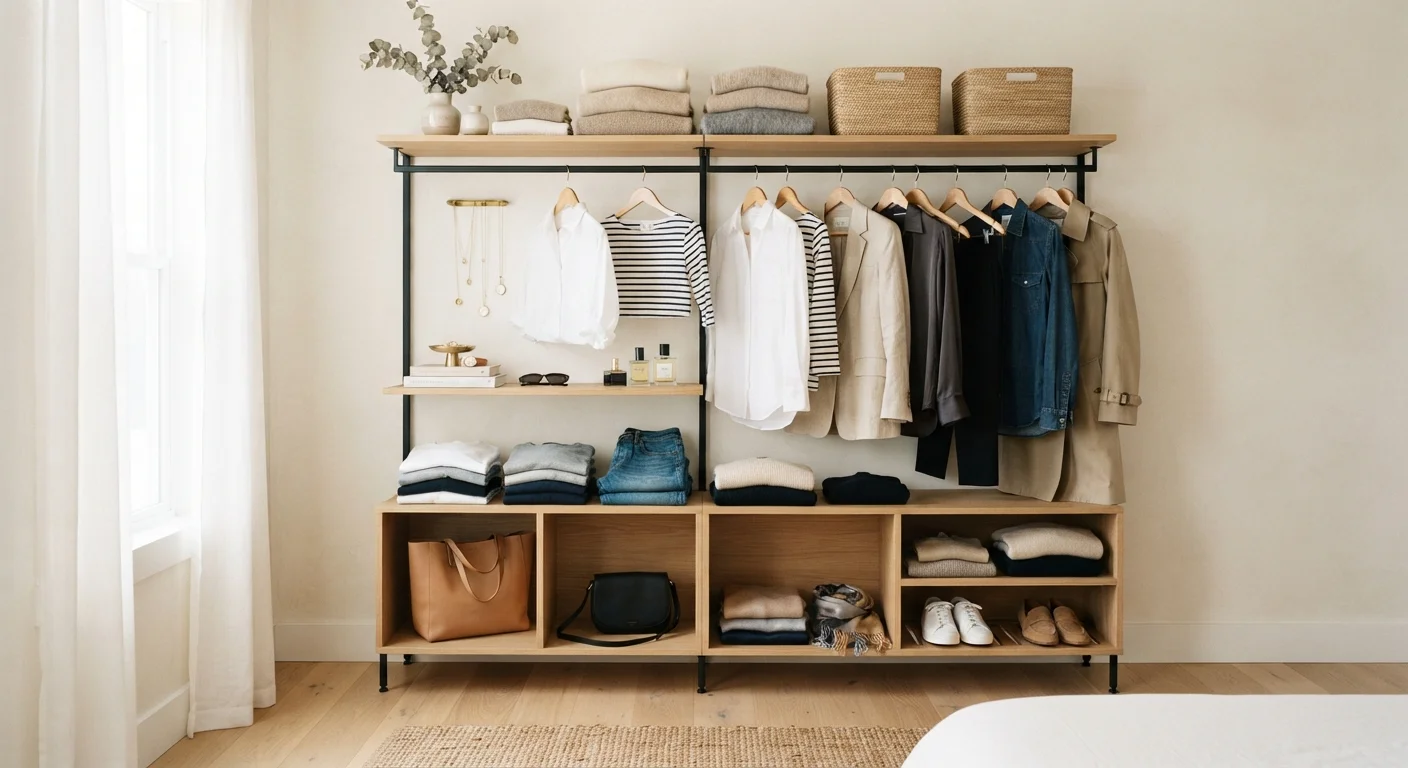
A functional wardrobe is built on versatile pieces that mix, match, and hold up over time. Think of these as your wardrobe's backbone — items that anchor outfits rather than completing just one look.
- Neutral-toned bottoms: Well-fitting pants or jeans in navy, black, or khaki pair with almost anything.
- Layering tops: A clean crewneck, a simple button-down, and a lightweight knit give you three distinct outfit tones from one category.
- Outerwear that does double duty: A structured jacket or a versatile coat transitions from work to weekend without skipping a beat.
- Comfortable footwear in two registers: One casual pair and one slightly polished pair covers the majority of real-life scenarios.
For a deeper look at which specific categories earn their keep across occasions, our wardrobe staples guide walks through each one in detail.
Before adding anything new to your closet, ask whether it works with at least three things you already own. If the answer is no, it's a costume, not a wardrobe piece.
The 'three-outfit rule' is a practitioner shortcut used by personal stylists to prevent impulse purchases that create clutter rather than options.
Invest in basic tailoring before investing in more clothes. A $15 hem on a $30 pair of pants often looks better than an ill-fitting $100 pair.
Fit is consistently cited by stylists and fashion editors as the single greatest differentiator between polished and passable dressing.
Dressing for Real Life Situations
Most everyday dressing happens across a handful of recurring situations: working (in-office or from home), running errands, socializing casually, and attending occasional events. The smartest approach is to build outfits around these contexts rather than singular occasions.
Work and Professional Settings
Smart-casual is the de facto standard across most American workplaces. A well-fitted chino or tailored pant, paired with a tucked or untucked button-down and clean footwear, reads as intentional without being overdressed. When in doubt, slightly more polished beats slightly more casual.
Weekends and Casual Days
Comfort doesn't require looking sloppy. Well-fitted denim, a quality t-shirt, and a clean sneaker or casual loafer is a formula that works consistently. The detail that elevates casual wear most reliably is fit — not price.
Events and Special Occasions
You don't need a separate wardrobe for events. Elevating your existing pieces — adding a blazer, swapping sneakers for leather shoes, or choosing a more structured top — is often all it takes. See how your existing wardrobe adapts through seasonal shifts with our seasonal dressing guide.
The Elevation Trick That Always Works
Keep one 'elevator piece' accessible in your closet — a structured blazer, a clean leather belt, or a simple scarf. Adding it to an otherwise casual outfit instantly shifts the register without requiring a full outfit change. This works reliably across gender expressions and body types.
Fit, Fabric, and Care: The Quiet Differentiators
Two identically priced garments can look dramatically different based solely on how they fit. Clothing that fits your actual body — not the body on the tag — communicates confidence and intention regardless of what it cost.
Understanding Fit
Shoulders should sit at the edge of your shoulder, not droop or pull. Trouser hems should graze the top of your shoe. Shirts shouldn't gap at the chest or bunch at the back. Basic tailoring adjustments — hems, side seams, sleeve length — are widely available and often inexpensive.
Fabric Basics
Natural fibers like cotton, wool, and linen breathe better, hold their shape longer, and age more gracefully than most synthetics. Blends can offer durability benefits, but checking fabric content before purchasing is a habit worth building.
Garment Care
Following care labels extends garment life significantly. Washing in cold water, air-drying structured items, and storing knits folded rather than hung are simple practices that preserve both shape and color over time.
Avoid Over-Washing Your Clothes
Washing garments too frequently — especially denim and wool — accelerates fiber breakdown, fading, and shape loss. Most items don't need laundering after every wear. Spot-cleaning, airing out, and using a fabric steamer between washes extends garment life considerably.
Building Confidence Through Personal Style
Style confidence doesn't arrive fully formed — it develops through low-stakes experimentation and paying attention to what actually makes you feel good. Start by noticing which outfits you reach for on days you want to feel capable and comfortable. Those choices reveal your natural aesthetic more accurately than any trend report.
If you're ready to go deeper on developing a look that's authentically yours, our personal style end-to-end guide covers aesthetic development from the ground up. And for broader guidance on expressing your individual look, explore our personal style hub.
“Getting dressed is a daily act of self-expression. When your wardrobe aligns with who you actually are and how you actually live, that daily act becomes effortless rather than stressful.”
— Tim Gunn, Fashion educator and television personality
The goal of everyday style isn't perfection — it's ease. When your wardrobe genuinely serves your life, getting dressed becomes one less thing to think about, freeing up energy for everything else that matters.