
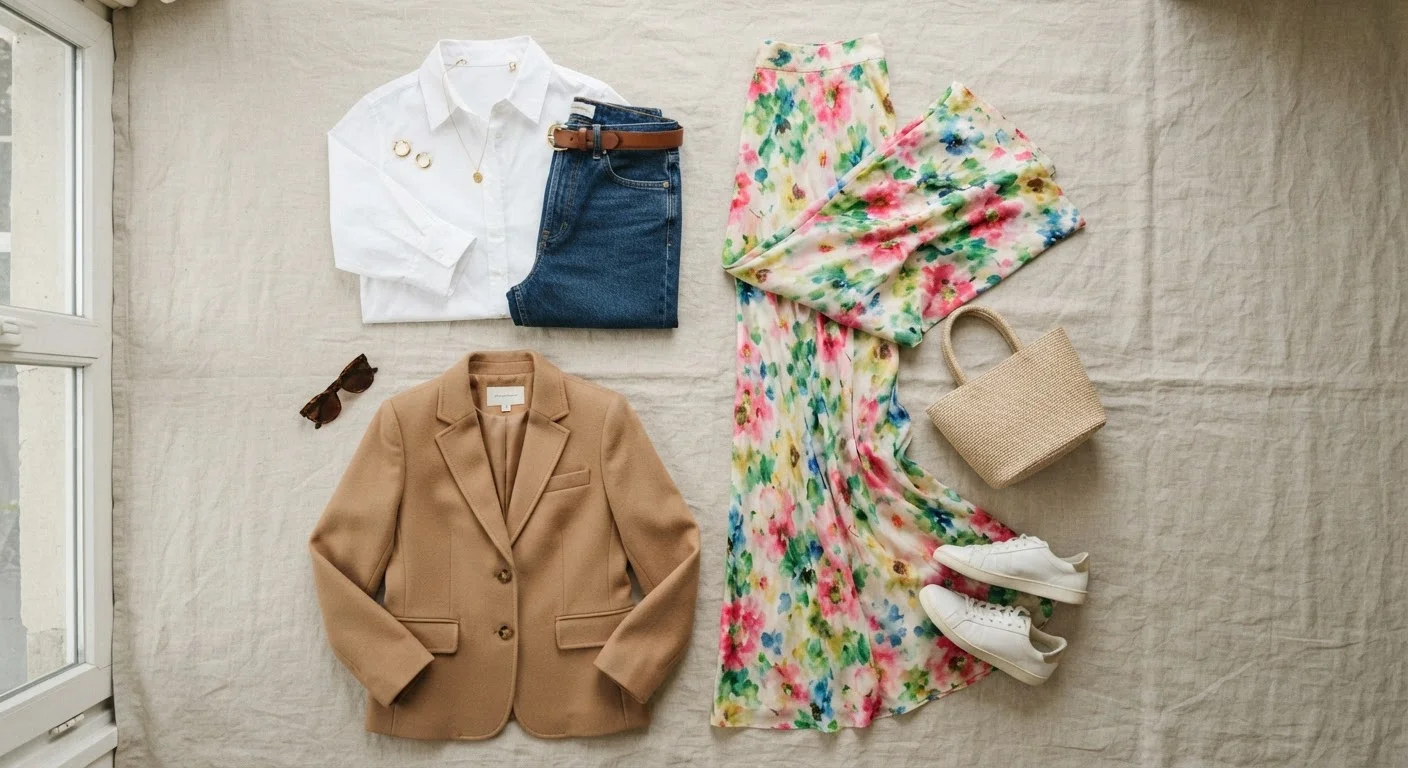
What Is a Style Archetype?
A style archetype is a recognized pattern of aesthetic preferences — a shorthand way of describing how someone consistently dresses, selects colors, and presents themselves to the world. Think of archetypes less as rigid boxes and more as reference points on a broad style map.
Understanding archetypes can accelerate the process of building a wardrobe that actually works for you. As explored in what personal style actually means, your style identity runs deeper than the season's trends — it's rooted in how you want to feel and be perceived day-to-day.
Most people don't fit perfectly into a single archetype, and that's completely normal. Many personal styles are blends — a Romantic-Minimalist, a Classic with Streetwear leanings, or a Bohemian who codes as Artsy on weekends. Use these definitions as a vocabulary, not a verdict.
| Number of core archetypes | 10 (commonly recognized) (Varies by framework; some systems list fewer, others more) |
| Most common archetype blend | Classic + Minimalist (Frequently cited in personal styling literature) |
| Are archetypes gender-specific? | No — all archetypes apply across gender expressions |
| Do archetypes change over time? | Yes — style identity naturally evolves with life stage |
| Primary use of archetype knowledge | Wardrobe editing, shopping decisions, and style communication |
The Core Style Archetypes, Defined
The following archetypes appear consistently across fashion education, personal styling frameworks, and aesthetic theory. Each includes its defining characteristics, go-to wardrobe elements, and the underlying mood it expresses.
Classic
Timeless, polished, and unfussy. The Classic archetype gravitates toward well-tailored pieces, neutral palettes, and enduring silhouettes that hold up across decades. Think structured blazers, crisp oxford shirts, and quality leather accessories. The mood: reliable confidence.
Minimalist
Deliberate reduction is the core principle here. Minimalists favor clean lines, a restrained color palette (often monochromatic or tonal), and an intentional approach to what earns space in the wardrobe. Less visual noise, more thoughtful precision. The mood: calm authority.
Romantic
Softness defines the Romantic archetype — flowing fabrics, floral prints, delicate layering, and feminine silhouettes. This style leans into texture and detail: lace, ruffles, satin finishes, and dusty blush tones. The mood: expressive warmth.
Bohemian
Relaxed, free-spirited, and rooted in global textile traditions. Bohemian style layers prints, embraces earthy tones and saturated jewel colors, and celebrates handcrafted or artisan-looking pieces. Movement and ease are central. The mood: creative freedom.
Edgy / Alternative
This archetype challenges conventions through contrast, dark palettes, hardware details, and unexpected silhouette combinations. Leather, structured cuts, and graphic elements are common signatures. The mood: independent and unapologetic.
Preppy
Collegiate influences define Preppy style — polo shirts, cable-knit sweaters, loafers, and plaid or stripe patterns. Color tends toward navy, forest green, and burgundy with crisp white. The mood: polished and approachable.
Streetwear
Rooted in urban culture, Streetwear centers on comfort-forward silhouettes, graphic expression, and athletic-inspired pieces. Hoodies, joggers, statement sneakers, and bold logos are hallmarks. The mood: casual and culturally current.
Artsy / Eclectic
This archetype uses clothing as a creative medium. Pattern mixing, unconventional proportions, color-blocking, and vintage or sculptural pieces characterize the Artsy look. The mood: visually adventurous and self-expressive.
Glamorous
Elevated fabrics, dramatic silhouettes, and a commitment to polished presentation define Glamorous style. Sequins, luxe textures, bold accessories, and a confident color approach are central. The mood: impactful and celebratory.
Casual / Everyday
Effortlessly practical without sacrificing personality. Well-fitted basics, quality denim, versatile sneakers, and simple layering form the foundation. The mood: comfortable and unpretentious.
Style archetype
A recognizable pattern of aesthetic preferences that describes how someone consistently approaches clothing and self-presentation. Archetypes serve as reference points, not rigid categories.
Silhouette
The overall shape or outline of an outfit or garment when viewed from a distance. Silhouette is a key variable that distinguishes one archetype from another.
Tonal dressing
A styling technique where multiple shades of the same color family are worn together. Common in Minimalist and Classic archetypes for a cohesive, intentional look.
Capsule wardrobe
A curated, small collection of versatile wardrobe pieces that work well together. Often associated with the Minimalist archetype but applicable to any style identity.
Aesthetic
The overall visual sensibility or mood conveyed by a style — encompassing color, texture, silhouette, and the emotional impression a look creates.
How to Use Archetypes to Develop Your Own Style
Identifying an archetype that resonates with you — or two or three that overlap — gives you a practical editing tool. When you're unsure whether a piece belongs in your wardrobe, ask: Does this align with the aesthetic I'm building? Archetypes make that question answerable.
If you're just starting out, finding your style from scratch is a great companion resource. For ongoing inspiration beyond the usual digital scroll, style inspiration sources beyond social media can broaden your visual references considerably.
It's also worth remembering that archetypes aren't permanent. Style evolves alongside life — a reality explored in how personal style develops over time. What resonates at one stage of life may shift entirely at another, and that's a feature, not a flaw.
For a full framework — from understanding your aesthetic to building out a functional wardrobe — the end-to-end personal style guide covers every stage of the process.
Archetypes Are a Starting Point, Not a Label
No archetype system is a diagnostic tool, and none carries authority over how you should dress. They exist to give you language for your preferences, not to limit them. If you love elements from four different categories, that's your archetype. Style frameworks are most useful when they expand your thinking — not when they narrow it.