
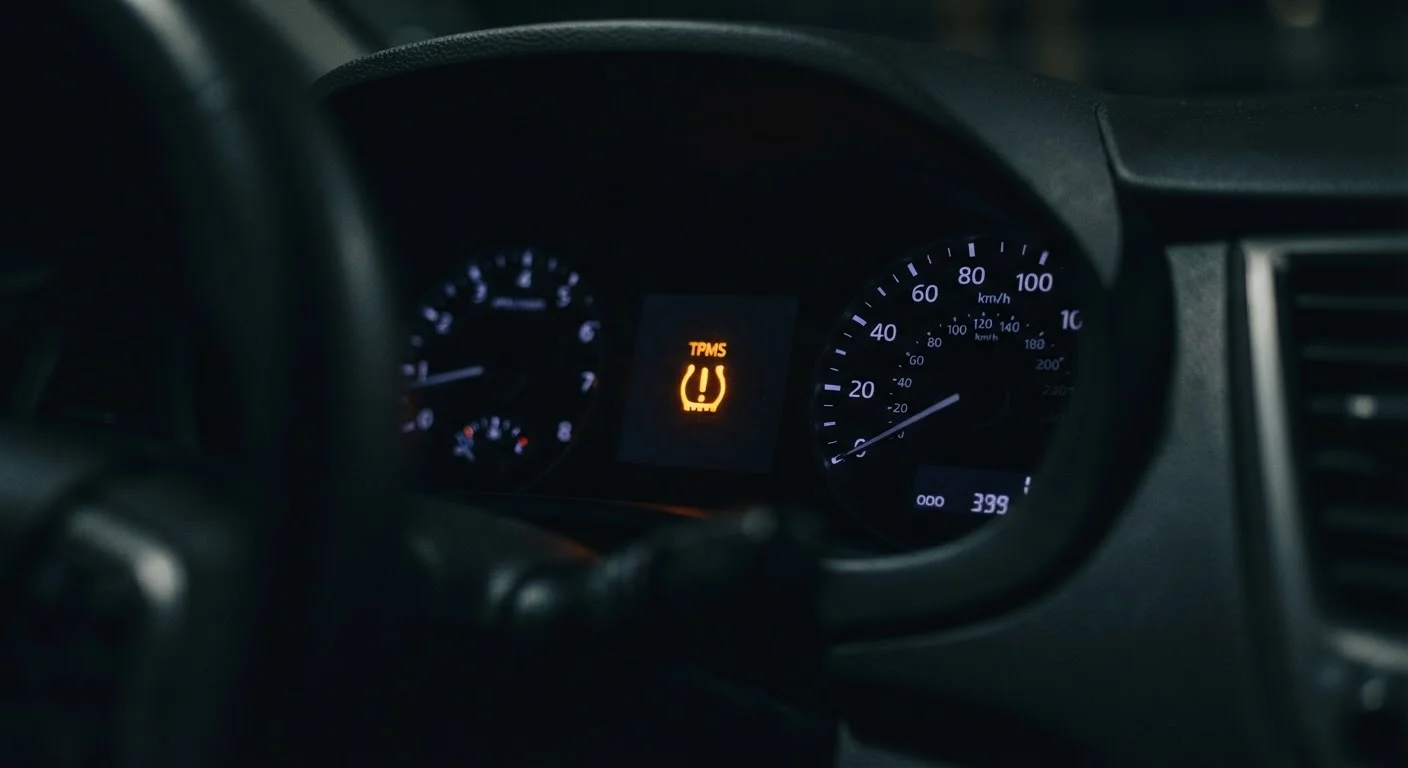
What the TPMS Warning Light Actually Means
When that horseshoe-shaped icon with an exclamation point appears on your dashboard, many drivers assume a tire is flat or nearly flat. In reality, the TPMS warning light is triggered when any tire's pressure falls to 25% or more below the vehicle manufacturer's recommended PSI - a threshold set by the National Highway Traffic Safety Administration (NHTSA). That could mean a tire at 22 PSI when it should be at 32 PSI, which is noticeably underinflated but not necessarily flat.
The light can illuminate for several distinct reasons: a slow leak from a nail or valve stem issue, seasonal temperature drops, a sensor malfunction, or a tire that was simply never inflated to spec. Understanding which situation you're dealing with determines your next step. For broader context on what other warning symbols mean, see our guide to dashboard warning lights.
TPMS Doesn't Replace a Pressure Gauge
The TPMS warning only activates after pressure has already fallen to a potentially unsafe level. By the time the light appears, fuel economy and handling may already be affected. Checking tire pressure manually with an inexpensive gauge once a month - especially before long trips or seasonal temperature changes - gives you a more complete and proactive picture of tire health.
Direct vs. Indirect TPMS: Two Different Technologies
Not all TPMS systems work the same way, and the difference affects how accurate and reliable your alerts will be.
- Direct TPMS places a dedicated pressure sensor and transmitter inside each wheel, usually mounted to the valve stem. It reports real-time PSI for each individual tire to the vehicle's computer. Most vehicles sold in the US since 2008 use this approach.
- Indirect TPMS doesn't measure pressure at all - it uses wheel-speed sensors from the anti-lock braking system (ABS) to detect when one wheel is rotating faster than others, which can indicate a lower tire radius caused by underinflation. It's less precise and can't distinguish between a pressure issue and a wheel-size mismatch.
Direct TPMS is more reliable, but its sensors contain sealed batteries and will eventually need replacement. Indirect systems require recalibration after tire rotations or replacements, otherwise the baseline data becomes inaccurate.
2008
Year TPMS became federally mandatory in US
The TREAD Act, passed after high-profile tire-related accidents, required TPMS on all new US passenger vehicles starting with model year 2008.
25%
Pressure drop needed to trigger TPMS alert
Per NHTSA standards, the TPMS warning must activate when any tire falls 25% or more below the vehicle's recommended cold inflation pressure.
1 PSI
Pressure lost per 10°F temperature drop
This well-established relationship between ambient temperature and tire pressure explains why TPMS lights frequently appear in cold weather without any leak present.
Why Temperature Is a Bigger Factor Than Most Drivers Realize
Physics plays a significant role in TPMS alerts. Tire pressure drops approximately 1 PSI for every 10°F decrease in ambient temperature. If you live in a region where overnight temperatures swing dramatically, tires that were properly inflated in the afternoon may register low by morning - even if there's no leak whatsoever.
This is one of the most common reasons drivers see the TPMS light during autumn and winter. Adding air to reach the recommended PSI (found on the sticker inside your driver's door jamb, not on the tire sidewall) is the correct response. For a deeper look at what those numbers mean for your safety, see our explainer on tire pressure and tread depth.
Always Check the Door Jamb for Correct PSI
The recommended tire pressure for your vehicle is printed on a sticker inside the driver's door jamb or in your owner's manual - not on the tire sidewall. The number on the sidewall is the maximum pressure the tire can hold, which is different from the optimum operating pressure for your specific vehicle. Using the wrong figure can leave tires dangerously over- or underinflated.
When a Refill Isn't Enough: Sensor Faults and Persistent Warnings
If you've inflated all four tires to the correct PSI and the TPMS light remains on after driving several miles, one of these situations may apply:
- Sensor battery failure - Direct TPMS sensors have finite battery lives. A dead sensor can't transmit data, causing the system to log a fault.
- Sensor damage - Corrosion, a damaged valve stem, or an improper tire change can physically break a sensor.
- System recalibration needed - After a tire rotation or replacement, some vehicles require a manual reset or drive cycle to re-sync sensors.
- A slow leak that refills can't fix - If pressure keeps dropping within days, you likely have a puncture, a faulty valve core, or bead-seal issue requiring a tire shop.
A flashing TPMS light - rather than a steady glow - is almost always a system malfunction signal, not a pressure alert. A qualified technician can read the fault codes to pinpoint the issue. TPMS data is also retrievable via your vehicle's OBD-II port; learn more in our OBD-II explainer.
TPMS is one of several driver-assist technologies now standard on modern vehicles. For a broader look at how these systems interact, see our guide to ADAS technologies.