
What ADAS Actually Is
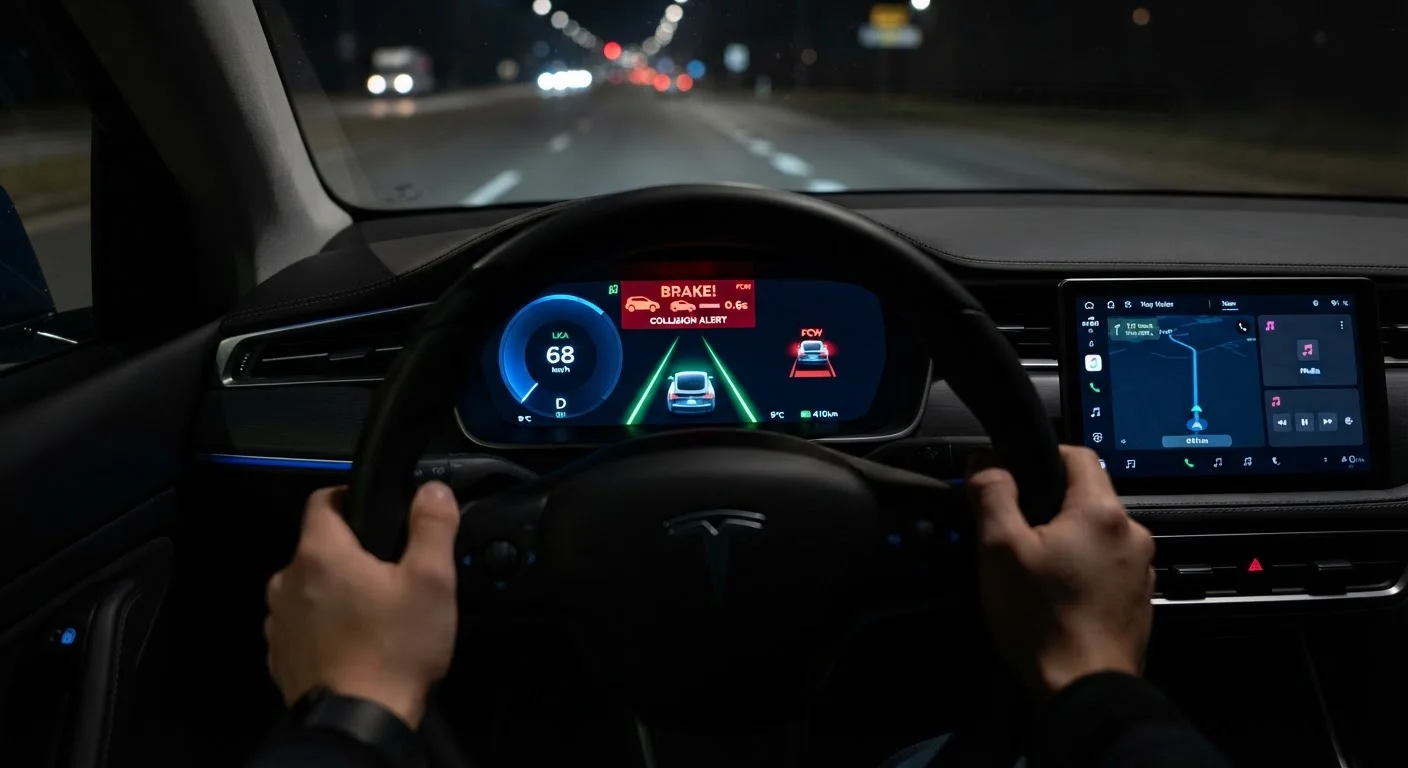
Advanced Driver Assistance Systems (ADAS) is an umbrella term for a family of electronic technologies that use sensors, cameras, and computing power to help drivers avoid collisions, stay in their lane, and manage fatigue. The term covers everything from a simple parking sensor that beeps when you get too close to a curb, to a sophisticated system that can automatically apply the brakes in an emergency.
ADAS is not a single feature - it's a category. The specific systems available in any given vehicle depend on the manufacturer, the model year, and the trim level. Because of this variation, your vehicle's owner's manual is the most reliable guide to what is actually installed in your car. You can also check the Car Ownership hub for broader guidance on getting the most from your vehicle.
ADAS
Advanced Driver Assistance Systems - a broad category of electronic features that use sensors and software to help drivers avoid hazards and reduce fatigue.
Automatic Emergency Braking (AEB)
A system that detects an imminent collision and automatically applies the brakes if the driver has not responded in time.
Adaptive Cruise Control (ACC)
A version of cruise control that automatically adjusts vehicle speed to maintain a safe following distance from the car ahead.
Lane Keeping Assist (LKA)
A system that applies gentle steering input to guide a drifting vehicle back within its lane markings.
Radar
A sensing technology that uses radio waves to measure the distance and speed of nearby objects, even in fog or rain.
Blind-Spot Monitoring (BSM)
A system that uses sensors to detect vehicles in adjacent lanes and warns the driver before a lane change could cause a collision.
The Core ADAS Technologies Explained
Most mainstream ADAS features fall into a handful of categories:
- Automatic Emergency Braking (AEB)
- Detects an imminent forward collision and applies the brakes if the driver hasn't reacted in time. Some systems also detect pedestrians and cyclists.
- Lane Departure Warning (LDW) and Lane Keeping Assist (LKA)
- LDW alerts you - usually with a vibration or audible chime - when you drift over lane markings without signaling. LKA goes further, applying gentle steering correction to guide you back into your lane.
- Adaptive Cruise Control (ACC)
- Maintains a set following distance from the vehicle ahead, accelerating and braking automatically. Some versions can bring the car to a full stop in traffic.
- Blind-Spot Monitoring (BSM)
- Uses rear-facing radar or cameras to detect vehicles in the adjacent lanes and warn the driver - typically with an icon in the side mirror - before a lane change.
- Rear Cross-Traffic Alert
- Warns of approaching traffic when reversing out of a parking space, a scenario where the driver's view is often limited.
- Traffic Sign Recognition
- Uses a forward camera to read speed limit signs and display the current limit on the instrument cluster or head-up display.
Check Your Trim Level Before Assuming
Not every vehicle at a given price point includes all ADAS features. Automakers frequently bundle systems like blind-spot monitoring or adaptive cruise control into optional safety packages or higher trims. Verify your vehicle's actual build sheet or window sticker - or the owner's manual - to confirm exactly which systems you have.
How These Systems Sense the World Around You
ADAS relies on three main sensing technologies, often used in combination:
- Cameras - Forward, rear, and side cameras capture visual information used for lane markings, traffic signs, and pedestrian detection. They are inexpensive but highly sensitive to lighting conditions and obstructions like dirt or ice.
- Radar - Short- and long-range radar measures the distance and speed of objects, even in low visibility. Radar is more weather-resistant than cameras and is the backbone of most adaptive cruise control and AEB systems.
- Ultrasonic sensors - Short-range sensors typically built into bumpers, used mainly for parking assistance and low-speed detection. They are the technology behind most audible parking beepers.
A growing number of vehicles also incorporate lidar (light detection and ranging), though this remains more common on prototype or premium vehicles than in mainstream production cars. When sensors fail or become obstructed, the relevant ADAS features may display a warning - something covered in detail in our guide to dashboard warning lights.
Real Limits Every Driver Should Know
ADAS technologies can meaningfully reduce crash risk, but they are not infallible and they are not a substitute for attentive driving. Every system has conditions under which it performs poorly or stops working altogether.
- Weather: Heavy rain, snow, fog, and direct sun glare can blind cameras and overwhelm radar, causing systems to deactivate.
- Dirty or damaged sensors: A mud-splattered front bumper can block radar. A cracked windshield near the forward camera can trigger faults in LKA and AEB. Keeping sensors clean is part of routine care - a detail covered in maintenance tasks most drivers overlook.
- Road markings: Faded, worn, or temporary construction-zone markings confuse lane-keeping systems.
- Speed thresholds: Many AEB systems only activate within specific speed ranges and may not engage at highway speeds or in very slow parking-lot scenarios.
Over-Reliance on ADAS Is a Real Risk
Research from traffic safety organizations has found that some drivers significantly overestimate the capability of driver-assist systems, treating partially automated features as though the car can fully handle driving. This misplaced trust has been a contributing factor in serious crashes. No currently available consumer vehicle is fully autonomous - all require an alert, engaged driver behind the wheel.
The core principle is straightforward: treat every ADAS feature as a backup layer, not a primary one. You remain legally and practically responsible for the vehicle at all times.
Getting the Most From Your ADAS Features
A few practical habits help ADAS systems work as intended and help you stay safer when they can't:
- Read the relevant sections of your owner's manual. Each manufacturer implements these features differently, and the manual will tell you exactly how to enable, adjust, or disable each system.
- Keep sensors and cameras clean. Include a quick check of the front bumper, rear bumper, and windshield camera area as part of any wash routine.
- Pay attention to warning lights and alerts. When an ADAS system flags a fault, it's telling you to revert to fully manual driving. Don't dismiss those indicators.
- Understand what each alert means in the moment. A lane departure vibration is informational - you decide whether to correct. An AEB intervention is the car acting autonomously - expect it and maintain control afterward.
- Pair ADAS with other good habits. Devices like a properly installed dashcam - see our dashcam setup guide - complement ADAS by providing an objective record if an assist system doesn't prevent an incident.
ADAS represents a genuine leap forward in vehicle safety. Understanding exactly what these systems do - and where they fall short - keeps you firmly in control of the machine they're designed to help you drive better.