
Why Makeup Feels Intimidating (And Why It Doesn't Have To)
Walk into any beauty aisle and you'll face hundreds of products, each promising something different. No wonder beginners feel frozen. The beauty industry is enormous—and it has a financial incentive to make its offerings feel essential and complex. The reality is much simpler: makeup is a skill, and like any skill, it starts with a handful of fundamentals.
The goal here isn't perfection on day one. It's building enough confidence to experiment without feeling like you're doing it wrong. If you've ever wanted to try a simple everyday look but didn't know where to begin, this guide is designed specifically for you. You might also find it useful to think about makeup alongside your broader sense of personal style—our guide on finding your personal style is a good companion read.
Tinted moisturizer
A lightweight product that combines skin hydration with a small amount of color coverage—less opaque than foundation and ideal for a natural, everyday look.
Concealer
A pigment-dense product used to cover specific areas like dark under-eye circles or blemishes, applied after foundation for targeted coverage.
Setting powder
A finely milled powder pressed or dusted over liquid foundation to reduce shine, absorb oil, and help makeup last longer throughout the day.
Non-comedogenic
A term used on product labels to indicate the formula is designed not to clog pores—often recommended for acne-prone or sensitive skin types.
Pilling
The small, flaky or balled-up bits that form when two incompatible products rub together on skin—most often caused by layering products before the previous one has absorbed.
Spoolie
A small wand brush with a spiral bristle head, similar to a clean mascara wand, used to groom brows into place or separate lashes after mascara application.
The Essential Tools Every Beginner Actually Needs
Before buying products, understand that how you apply makeup matters as much as what you apply. A few versatile tools go a long way:
- A flat-edge or buffing brush for blending foundation smoothly
- A damp makeup sponge (often called a beauty blender) for a natural, skin-like finish
- A fluffy powder brush for setting powder and blush
- A small concealer brush or your fingertip for targeted coverage
- A spoolie brush to groom brows and separate lashes
You don't need a brush for every step. Many beginners do fine with a sponge and two or three brushes total. Fingers work surprisingly well for cream products like blush and eyeshadow—body heat helps blend them naturally.
Clean Tools Make a Real Difference
Dirty brushes and sponges don't blend well and can transfer bacteria to your skin. A quick rinse with gentle soap once a week keeps tools performing well and your skin happier. Let them air-dry completely before using again—damp brushes can grow mold.
Application Order: The Simple Logic Behind It
Makeup application order follows a clear logic: start with what touches skin directly, layer thinner products before thicker ones, and finish with anything that needs to sit on top. Here's a beginner-friendly sequence:
- Skincare base — moisturizer, then SPF (this also acts as a primer in many cases)
- Foundation or tinted moisturizer — sheerer, lighter coverage for most everyday looks
- Concealer — only where needed (under eyes, over blemishes)
- Setting powder — optional, but helpful for oily skin or longer-wear needs
- Blush or bronzer — adds warmth and dimension
- Eye makeup — eyeshadow first, then liner, then mascara last
- Lip color — applied after everything else to avoid smearing
This sequence keeps products from sliding around or pilling (the small, flaky balls that form when incompatible products rub together). Pairing your makeup habits with a solid skincare base helps everything sit better—see our morning skincare routine guide for the foundational steps.
Building a Realistic Everyday Routine
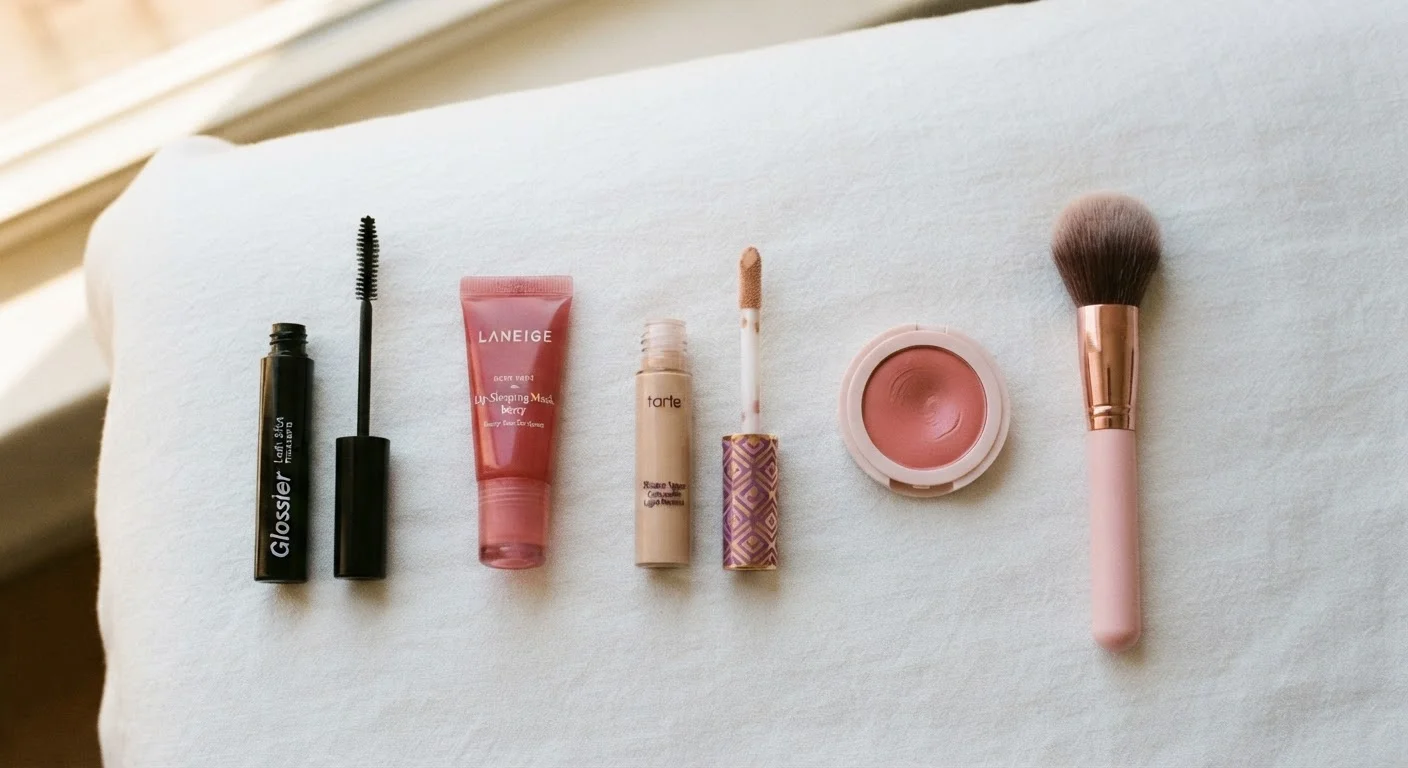
The most effective makeup routine is the one you'll actually do. For most beginners, that means five minutes and five products, not a 20-step process. A practical starting routine might look like:
- Tinted moisturizer or light-coverage foundation blended with a sponge
- Concealer under the eyes and over any spots
- One swipe of cream blush on the apples of the cheeks
- Two coats of mascara on the upper lashes
- A tinted lip balm for a hint of color and hydration
That's it. This routine takes minimal time, requires minimal products, and looks polished and intentional. Once it feels second-nature, you can introduce one new element—a brow gel, an eyeliner, a bronzer—without overwhelming yourself. When you're ready to audit what's earning its place in your kit, this guide on keeping your routine simple is worth bookmarking.
Your Routine Will Evolve Naturally
There's no finish line with a makeup routine—most people adjust their approach as seasons change, their skin shifts, or their interest in certain looks grows. Starting minimal and adding gradually is a much smoother path than buying everything at once and feeling stuck. Think of your current routine as a working draft, not a final answer.
Common Beginner Mistakes and How to Sidestep Them
A few missteps show up constantly for beginners—and they're all easy to correct once you know what to look for:
- Matching foundation to your hand or wrist
- Your hand and face are often different shades. Test foundation on your jawline in natural light instead.
- Applying too much product at once
- Start with a small amount—you can always add more. Removing excess after blending is harder than building up gradually.
- Skipping blending at the edges
- Foundation that stops abruptly at the jawline or hairline looks unnatural. Blend downward onto the neck slightly and inward toward the hairline.
- Using old or expired products
- Mascara, for example, should generally be replaced every three months; liquid eyeliners and foundations have similar shelf lives. Expired products can perform poorly and may irritate skin.
- Introducing too many new products at once
- If your skin reacts, you won't know what caused it. Our guide to introducing new products safely walks through a methodical approach. Once your routine feels solid, you can also use a weekly beauty routine audit to spot what's working and what isn't.
Makeup is genuinely forgiving—most mistakes can be fixed with a cotton swab dipped in micellar water. Give yourself permission to experiment, make errors, and adjust. That's exactly how every skilled makeup wearer learned.