
The Real Reason Getting Dressed Feels Impossible
Most people who feel frustrated by their wardrobe don't have a shortage problem — they have a compatibility problem. Pieces that looked great in isolation end up clashing in practice, leaving you staring at a full closet with nothing to wear. The good news is that wardrobe incoherence almost always traces back to a handful of repeatable mistakes, and recognizing them is more than half the battle.
Understanding how style cohesion actually works can transform the daily getting-dressed experience from stressful to almost automatic. For a deeper look at how your clothing connects to your sense of self, see our piece on rebuilding alignment between identity and style. Below, we break down the most common outfit-wrecking mistakes — and exactly how to correct each one.
Common Mistakes That Kill Outfit Cohesion
These errors show up across closets of every size and budget. Work through them honestly — even fixing one or two can noticeably shift how well your wardrobe functions.
Shopping for individual pieces instead of outfit combinations.
Why it happens: Stores display items in isolation, and something that photographs beautifully on a mannequin may have no logical partner in your actual closet.
Maintaining too many competing color palettes at once.
Why it happens: Trends shift constantly, and over time closets accumulate colors that were each individually appealing but don't relate to each other.
Mixing style registers without intention — pairing formal pieces with overly casual ones in ways that read as mismatched rather than deliberate.
Why it happens: People often grab whatever fits the weather or mood without considering whether pieces share the same aesthetic language.
Ignoring fit as a cohesion factor.
Why it happens: Fit issues develop gradually — weight changes, aging fabrics, or simply purchasing without trying on. Ill-fitting pieces rarely integrate smoothly with well-fitted ones.
Over-relying on statement or novelty pieces without enough basics to anchor them.
Why it happens: Statement items feel exciting to shop for, while basics feel boring — so basics get deprioritized, leaving a closet full of pieces with nothing to ground them.
~80%
Clothes worn regularly by most people
Research in consumer behavior consistently suggests most people regularly wear only a fraction of what they own, with estimates often landing around 20% of the wardrobe doing 80% of the work.
3+
Combinations a piece should form to earn closet space
Style professionals commonly recommend that each wardrobe item should be able to form at least three distinct outfit combinations to justify its place in a functional closet.
Building a Wardrobe That Actually Works Together
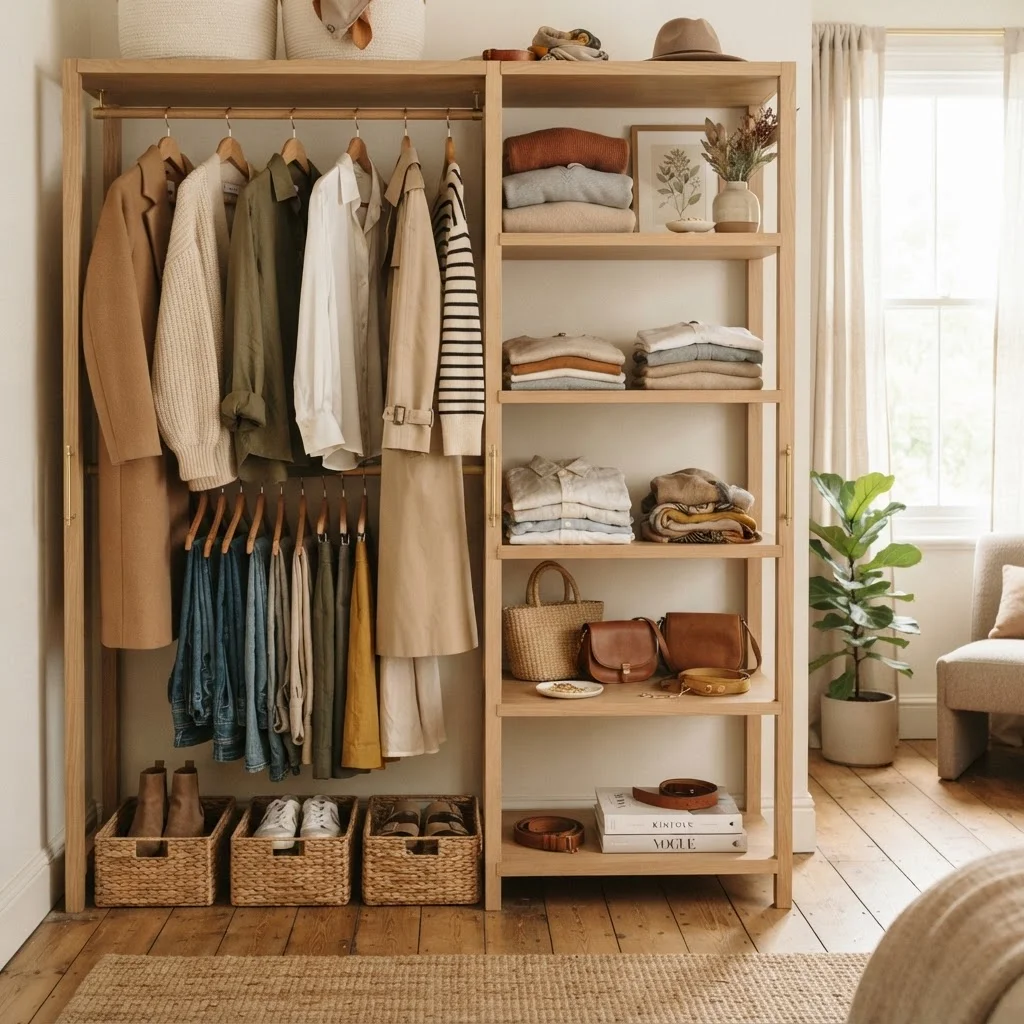
Once you've identified the mistakes undermining your closet, the fix is less about shopping and more about strategy. Start by establishing a core color palette of three to five tones that genuinely flatter you and that you're naturally drawn to. When the majority of your pieces share that palette, almost anything pairs with almost anything else — and getting dressed becomes noticeably faster.
Next, audit your closet for style register consistency. Style register refers to the overall formality and aesthetic of a piece — relaxed, polished, edgy, romantic. Pieces from wildly different registers rarely combine well without intentional contrast. If you love both laid-back and tailored looks, treat them as two separate capsule groups rather than one muddled mass.
Avoid Solving Cohesion Problems by Shopping More
It's tempting to think the fix is finding 'the right piece,' but adding more items to an incoherent wardrobe usually amplifies the confusion. Pause new purchases until you've identified your core palette and style register — then shop with those parameters as a filter rather than browsing broadly.
Finally, think in terms of outfit formulas — repeatable combinations you know work. Our guide on the outfit formula approach is a practical starting point. For more on why a larger wardrobe can actually deepen the problem, a bigger closet doesn't always mean more to wear is worth a read. And if seasonal transitions always throw off your cohesion, explore dressing well across seasons without a new wardrobe. The underlying principles of what makes combinations feel effortless are covered in depth in the principles behind outfits that look put-together.