
What an Outfit Formula Actually Is
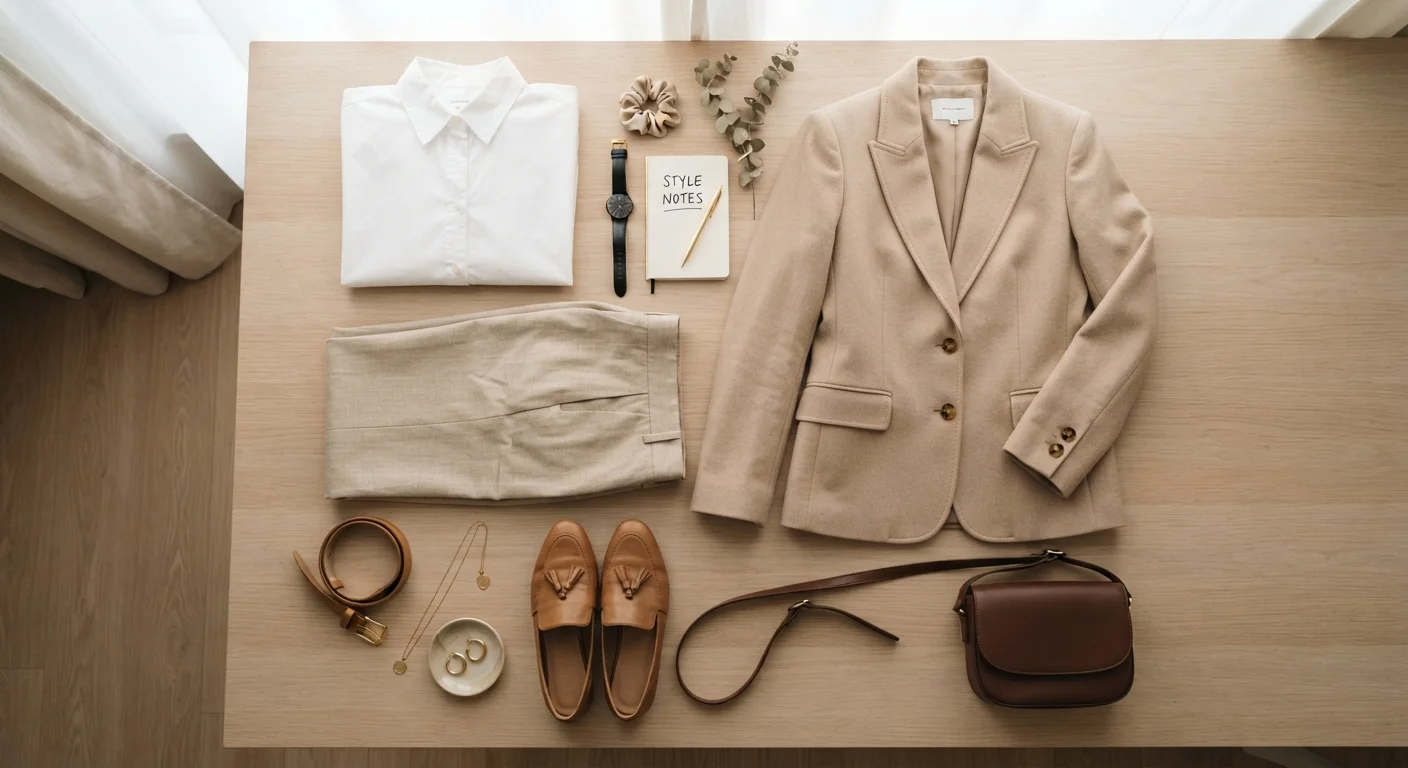
An outfit formula is a repeatable structure — a reliable pattern of clothing categories that you can populate with different pieces. Think of it less like a rigid uniform and more like a recipe: the ratios stay consistent while the ingredients shift. A common example is slim-fit trousers + tucked knit + ankle boot. The specific color or fabric changes daily, but the architecture stays constant.
Formulas aren't about playing it safe. They're a creative scaffold. Once you stop spending mental energy on "does this even work together," you free up attention for the details — a great earring, an interesting texture, a bolder color choice. As the principles behind polished outfits suggest, effortless style usually comes from consistent structure, not happy accidents.
How to Identify Your Personal Formulas
Your existing wardrobe is the best data you have. Pull out the outfits you actually wear — not the ones you aspired to wear — and look for the common threads. Are you always reaching for straight-leg jeans? Do you consistently layer something over a simple top? These habits are proto-formulas waiting to be named and refined.
Once you've spotted two or three natural patterns, give each one a shorthand name that makes sense to you — "the meeting look," "the weekend errand outfit," "the going-out-without-trying formula." Named formulas are easier to rebuild intentionally when you're shopping or packing.
Building Formulas That Actually Fit Your Life
The most stylish formula in the world is useless if it doesn't match your real daily context. A creative director's uniform of oversized blazer and wide-leg trousers might not translate to a job that requires physical movement. Ground your formulas in the life you actually live.
Aim for three to five formulas total — enough to cover your main contexts (work, casual, social) without overwhelming your decision-making. If your wardrobe supports dressing through seasonal shifts, your formulas should flex across temperatures through layering rather than requiring entirely different structures each season.
Color also plays a central role in making formulas work. When the pieces in your formula share a coherent palette, getting dressed becomes even faster. The Color Confidence guide walks through how to establish a personal palette that makes those formula combinations click.
Evolving Your Formulas Over Time
Formulas aren't permanent rules — they're working hypotheses about what makes you feel like yourself. As your taste, lifestyle, or body changes, revisit them. Swap in a new silhouette, experiment with a different finishing piece, or retire a category that no longer resonates.
Formulas Work Best as Starting Points
If you find a formula starting to feel rigid or boring, that's useful feedback — not a failure. It usually means one element no longer reflects where your style is heading. Try replacing a single category piece with something that excites you and see if the structure still holds. Formulas should serve you, not constrain you.
The goal of a formula approach isn't sameness — it's confidence. When you know your structure, you can push boundaries in one element at a time rather than starting from zero every morning. That's the core of what the personal style end-to-end guide calls building a look that's authentically yours: consistent enough to be intentional, flexible enough to stay alive.